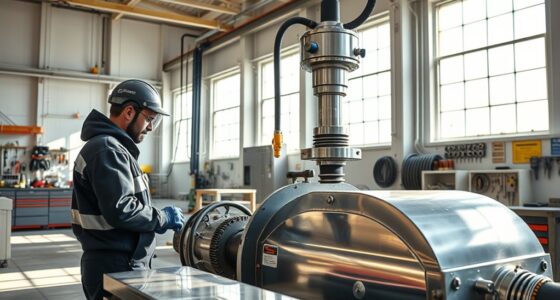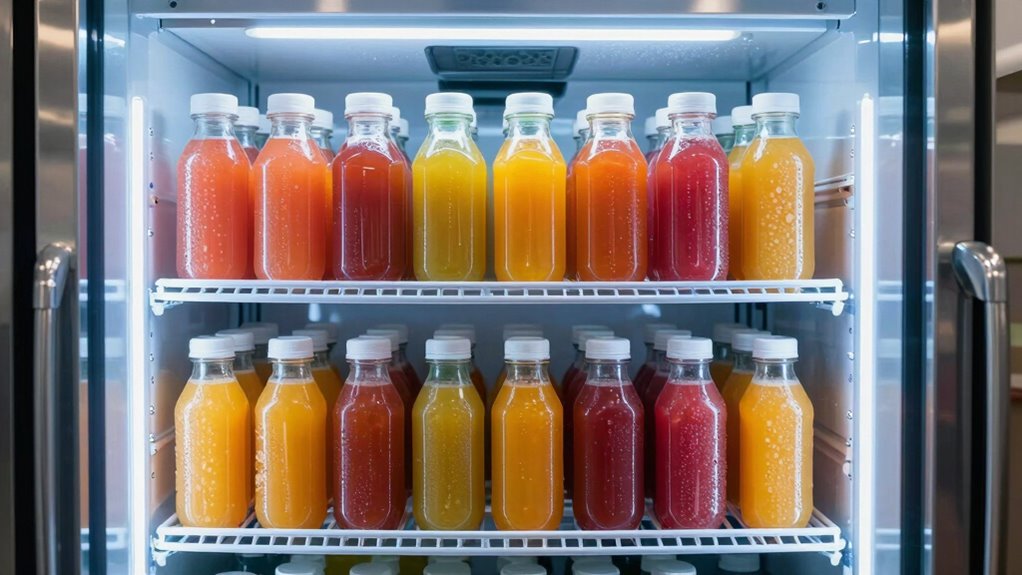

To prevent costly spoilage, you need to catch scaling signals early in your walk-in cooler. Look for signs like frost buildup, uneven temperatures, or unexpected energy spikes—all indicators that your cooler isn’t operating efficiently. Ignoring these signs can cause equipment failure and product loss. By staying alert to these signals, you’ll keep your juice fresh longer and save money. Keep going to discover more ways to optimize your cooler’s performance.

Get kitchen staples and gadgets delivered free with Prime
- Fast, free delivery on millions of items
- Prime Video, Amazon Music and more included
- Member-only deals all year
Key Takeaways
- Frost buildup inside coolers signals defrost failure, often overlooked until energy costs spike or product quality declines.
- Uneven temperatures or frequent fluctuations indicate scaling issues that can compromise juice freshness and safety.
- Increasing energy bills without volume changes suggest dirt buildup or worn seals causing efficiency loss.
- Unusual noises or vibrations often point to mechanical problems linked to scaling or component failure.
- Early detection of frost and temperature inconsistencies prevents costly repairs and extends cooler lifespan.
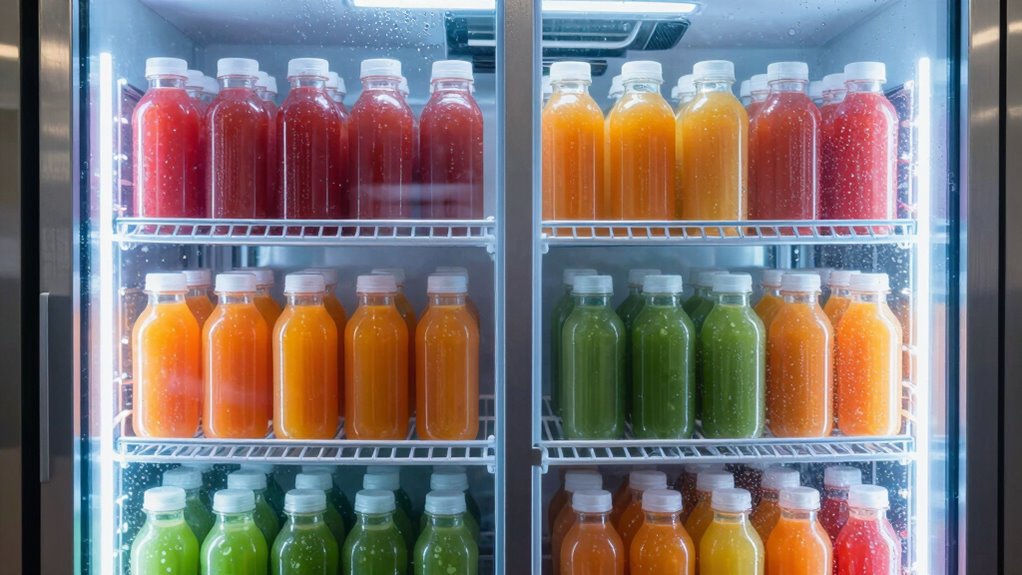
Are you looking for an efficient way to keep your bottled juice fresh and properly chilled? Walk-in coolers are the go-to solution for many brands, but recognizing when they’re no longer performing optimally is crucial. A common mistake is waiting too long to read the scaling signals that indicate your cooler needs attention. If you ignore these signs, you risk spoilage, increased energy costs, and compromised product quality.
Energy efficiency plays a pivotal role in maintaining your cooler’s performance. Over time, accumulated dirt, worn seals, or outdated components can cause your walk-in cooler to work harder than it should. This inefficiency not only raises your energy bills but also strains your equipment, leading to more frequent repairs or replacements. Regularly monitoring energy consumption and noting unexpected spikes can be a clear indicator that your cooler isn’t operating at peak efficiency. When you notice increased energy costs without a corresponding increase in product volume or ambient temperature, it’s time to investigate further. Energy efficiency is essential for cost management and extending equipment lifespan.
Regularly monitor energy use to spot inefficiencies before costly repairs and higher bills occur.
Temperature control is equally critical. Your walk-in cooler should maintain a consistent, optimal temperature to preserve the quality and safety of your bottled juice. If you start noticing uneven cooling, frequent temperature fluctuations, or if the thermometer shows readings outside your set range, these are strong signals that your cooler needs attention. Delayed response to temperature issues can accelerate spoilage, diminish product shelf life, and impact customer satisfaction. Keeping a regular check on temperature logs and observing patterns can help you identify issues early. Additionally, understanding refrigeration system components can help you troubleshoot problems more effectively. Recognizing signs of failing components can prevent larger breakdowns and costly repairs.
Another often overlooked scaling signal is the buildup of frost or condensation inside the cooler. Excess frost can hinder the refrigeration process, forcing the system to work harder and consume more energy. It’s a clear sign that your defrost cycle isn’t functioning properly or that there’s excess humidity. Addressing this promptly not only restores proper temperature control but also enhances energy efficiency. Additionally, listen for unusual noises or strange vibrations. These sounds can indicate mechanical problems that, if ignored, could lead to more serious and costly repairs.
In the end, staying attuned to these scaling signals helps you avoid costly downtime and ensures your bottles of juice stay fresh. By proactively managing energy efficiency and temperature control, you extend the lifespan of your equipment and guarantee the quality your customers expect. Don’t wait until spoilage or high energy bills become a reality—reading these early signals will save you time, money, and headaches in the long run.
walk-in cooler frost buildup detector
As an affiliate, we earn on qualifying purchases.
As an affiliate, we earn on qualifying purchases.
Frequently Asked Questions
What Is the Ideal Temperature Range for Bottled Juice in Walk-In Coolers?
You should keep bottled juice in walk-in coolers at 35-40°F to prevent juice fermentation and bottle condensation. Maintaining this temperature range slows fermentation, preserving freshness and flavor, while also avoiding excess condensation that can lead to spoilage or mold. Regularly monitoring the cooler ensures ideal conditions, helping you catch scaling signals early and prevent quality issues before they become costly.
How Often Should Walk-In Coolers Be Maintained for Optimal Juice Storage?
Think of your cooler as the heartbeat of your juice business—consistent care keeps it healthy. You should maintain your walk-in cooler at least weekly to prevent temperature fluctuations and guarantee proper storage. Regular cleaning schedules, ideally bi-weekly, help prevent mold and bacteria. By staying vigilant with maintenance, you prolong equipment life, safeguard juice quality, and keep customers coming back for fresh, safe products.
Are Energy-Efficient Walk-In Coolers Suitable for Bottled Juice Storage?
Yes, energy-efficient walk-in coolers are suitable for bottled juice storage. They often feature eco-friendly insulation, which helps retain cold temperatures while reducing energy use. Some models incorporate solar-powered cooling systems, making them even more sustainable and cost-effective. These coolers maintain ideal conditions for juice preservation, lowering operational costs and environmental impact. Choosing an energy-efficient cooler with these features ensures your bottled juice stays fresh and your business stays green.
What Are Common Signs That a Walk-In Cooler Needs Repairs?
You’ll notice your walk-in cooler needs repairs if the temperature fluctuates unexpectedly, which could signal a thermostat malfunction. Also, check the door seal integrity—if cold air escapes or frost forms around the edges, it’s a clear sign. Unusual noises or excessive energy bills are additional indicators. Addressing these issues promptly helps maintain ideal cooling and prevents more costly repairs down the line.
How Does Humidity Affect Bottled Juice in Walk-In Coolers?
Humidity affects bottled juice in walk-in coolers by causing condensation, which can spoil the product or promote mold growth. Proper humidity control helps maintain a *suitable* environment, preventing excess moisture. By managing humidity levels, you prevent condensation buildup on bottles and inside the cooler, ensuring your juice stays fresh longer. Regularly monitor and adjust humidity settings to keep condensation prevention a priority, safeguarding your products and maintaining quality.
Conclusion
Just as the early bird catches the worm, recognizing the signs to scale your walk-in coolers guarantees your bottled juice business thrives before opportunities slip away. Waiting too long can leave you playing catch-up, much like a ship ignoring the lighthouse’s warning. Stay vigilant and proactive—your future success depends on reading those signals early. Embrace the wisdom of foresight, and your brand will flow smoothly, nourishing growth rather than battling the storm.
Halloween Picks
halloween
As an affiliate, we earn on qualifying purchases.