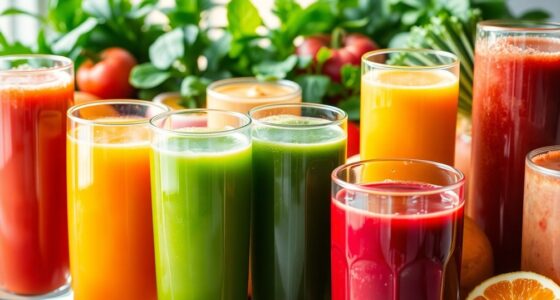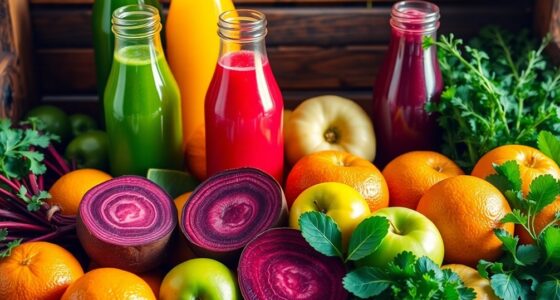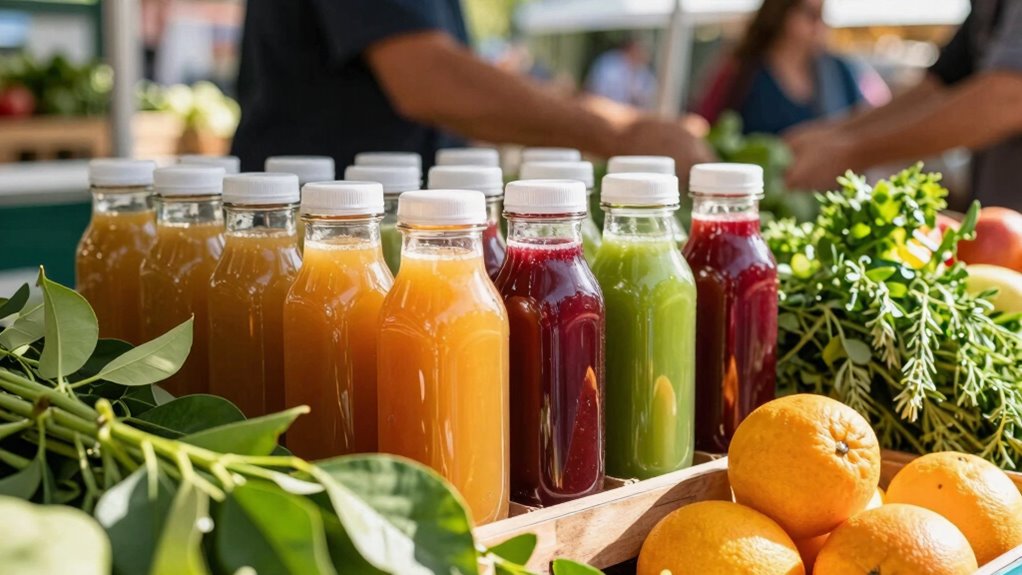

When you see “Organic Juice,” it signals your commitment to health, quality, and sustainability. It means the ingredients come from local, responsible farms and are grown without synthetic pesticides or fertilizers. This label also shows transparency, indicating that the brand values environmental responsibility and adheres to strict standards. Knowing what “organic” truly represents helps you make confident, informed choices aligned with your values. Keep exploring to discover more about what these labels really guarantee.

Get kitchen staples and gadgets delivered free with Prime
- Fast, free delivery on millions of items
- Prime Video, Amazon Music and more included
- Member-only deals all year
Key Takeaways
- It indicates a commitment to health, quality, and environmentally responsible sourcing practices.
- It assures consumers that ingredients are grown without synthetic pesticides or fertilizers.
- It reflects transparency about ingredient origin and sustainable farming methods.
- It signals adherence to strict organic certification standards, ensuring product authenticity.
- It demonstrates the brand’s focus on ethical, eco-friendly production supporting local communities.
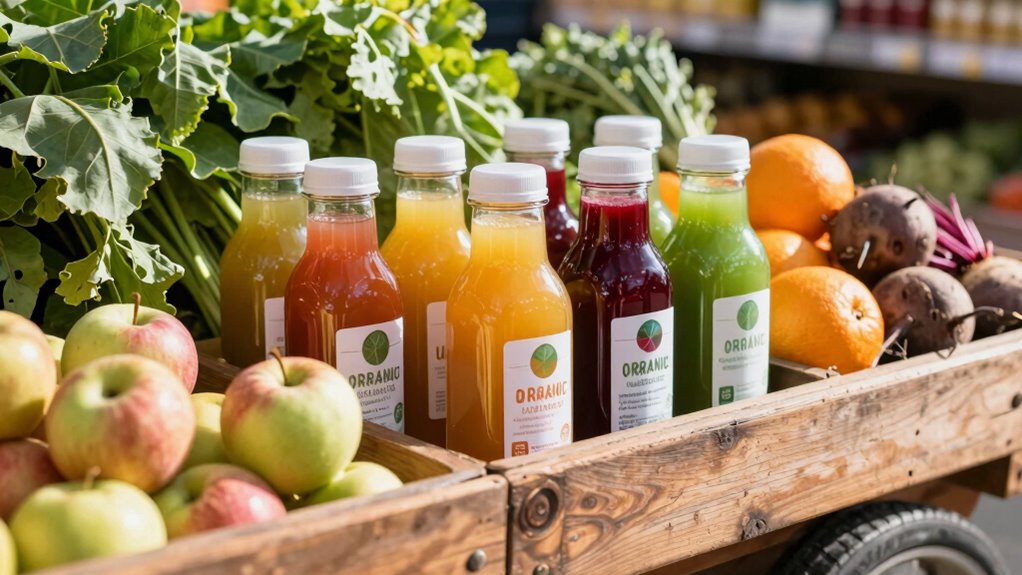
As more consumers seek healthier options, organic juice brands are finding innovative ways to catch your attention in stores. They want you to see their products as more than just a tasty beverage—they aim to signal commitment to quality, health, and environmental responsibility. When you pick up a bottle labeled “organic juice,” you’re often interpreting a broader message about how that juice was made, where it came from, and the values behind it. Many brands highlight their farm to table approach, emphasizing that the ingredients come directly from local, sustainable farms. This connection assures you that the juice isn’t just processed and shipped from far away but is rooted in transparent, responsible sourcing. It signals that the farmers grow their crops without synthetic pesticides or fertilizers, respecting the land and your health. This farm to table narrative isn’t just marketing fluff—it reflects an actual effort to minimize environmental impact and support local economies. When a brand communicates this connection, it signals to you that they prioritize freshness and quality, often resulting in a richer flavor and more nutrient-dense juice. Additionally, consumers are increasingly aware of the importance of sustainable practices in production, which can influence their purchasing decisions. Recognizing these practices can also help you identify brands that genuinely commit to environmental stewardship rather than just marketing claims. Many consumers now look for organic certification as a trusted indicator of genuine sustainable and chemical-free production. Moreover, understanding the regulations and standards that back these certifications can give you greater confidence in your choices. Being informed about certification processes helps ensure your selections align with your health and environmental values.
As an affiliate, we earn on qualifying purchases.
Frequently Asked Questions
How Is Organic Juice Different From Conventional Juice?
Organic juice differs from conventional juice because it emphasizes flavor purity through natural ingredients, avoiding synthetic additives. You’ll notice it’s made using eco-friendly production methods, like organic farming practices that prevent pesticide use and promote sustainability. This means the juice often tastes fresher and more authentic. When you choose organic, you support healthier farming and get a beverage that reflects nature’s true flavor without artificial enhancements.
Are Organic Juices Always More Nutritious?
You might think organic juices are always more nutritious, but that’s not guaranteed. While they often have fewer pesticides, flavor enhancement and marketing claims can make some seem healthier than they are. Organic certification signals fewer chemicals, but it doesn’t necessarily mean higher vitamin or mineral content. So, don’t rely solely on the label—check nutrition facts to determine if it truly offers more nutritional benefits.
What Certifications Ensure Juice Is Truly Organic?
You should look for certifications like USDA Organic, which guarantee juice meets strict certification standards and guarantees label accuracy. These certifications verify that the juice is produced without synthetic pesticides, fertilizers, or GMOs. When shopping, check for official seals on the packaging, and read labels carefully to confirm the organic claim. Trustworthy certifications give you confidence that the juice is genuinely organic and adheres to rigorous standards.
Does Organic Juice Have a Longer Shelf Life?
Organic juice often has a shorter shelf life compared to conventional options because it lacks synthetic preservatives. The preservation methods used aim to maintain freshness without chemicals, but they don’t considerably extend shelf life. You should consume it sooner to enjoy its ideal flavor and nutrients. Store it properly in the fridge, and always check the expiration date. Think of it as a delicate flower needing gentle care to stay fresh longer.
Is Organic Juice More Environmentally Sustainable?
Yes, organic juice is generally more environmentally sustainable. When you choose organic, you’re supporting sustainable farming practices that reduce chemical use and promote soil health. Organic farms often prioritize water conservation techniques, helping to conserve precious water resources. By opting for organic juice, you’re encouraging practices that lessen environmental impact, protecting ecosystems and promoting long-term sustainability. This choice aligns with efforts to support a healthier planet for future generations.
Conclusion
So, next time you see “organic juice,” remember it’s more than just a label. It signals quality, health, and sustainability—values that matter to 65% of shoppers. When you choose organic, you’re not only nourishing yourself but also supporting environmentally friendly farming. That little label can influence your buying choices, making a difference in your health and the planet. Keep an eye out for those signals—they speak volumes about what you really value.
Halloween Picks
halloween
As an affiliate, we earn on qualifying purchases.