
TL;DR

Get kitchen staples and gadgets delivered free with Prime
- Fast, free delivery on millions of items
- Prime Video, Amazon Music and more included
- Member-only deals all year
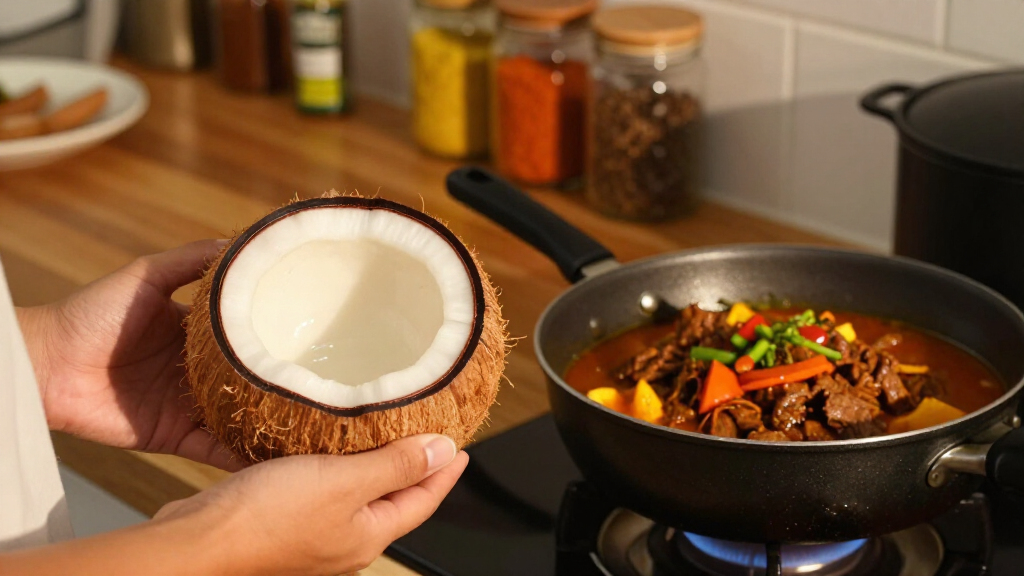
Coconut is a key ingredient in traditional beef rendang, providing flavor and texture. Experts confirm its essential role, though some variations exist. This influences authenticity and cultural identity.
Coconut is confirmed to be an essential ingredient in traditional beef rendang, crucial for achieving its characteristic flavor and texture, according to culinary experts. This confirmation underscores the ingredient’s cultural significance and authenticity in Indonesian and Malaysian cuisine.
Recent discussions among chefs and food scholars have reaffirmed that coconut, in the form of grated fresh coconut, coconut milk, or both, is fundamental to authentic beef rendang recipes. According to Dr. Aisha Rahman, a culinary historian at the University of Jakarta, coconut imparts a distinctive richness and depth that cannot be replicated with other ingredients.
Many traditional rendang recipes include coconut milk simmered with spices and beef, allowing the flavors to meld and the meat to become tender. The process of slow cooking with coconut helps develop the complex, aromatic profile that rendang is known for. While some modern variations use less coconut or substitute it with other ingredients, experts emphasize that the authentic taste relies heavily on coconut’s presence.
Coconut’s Role in Preserving Culinary Heritage
This confirmation highlights the importance of coconut in maintaining the authenticity of beef rendang, a dish recognized by UNESCO as part of Indonesia’s intangible cultural heritage. For chefs and food enthusiasts, understanding coconut’s role ensures respect for traditional methods and cultural identity. It also influences how rendang is prepared globally, affecting authenticity and culinary standards. The recognition of coconut’s essential role may impact culinary tourism and the preservation of traditional recipes amidst modern adaptations.As an affiliate, we earn on qualifying purchases.
Historical and Cultural Significance of Coconut in Rendang
Beef rendang originated in West Sumatra and has become a national dish across Indonesia and Malaysia. Traditionally, coconut milk and grated coconut are used as key ingredients, dating back centuries as part of local cooking practices. Over time, rendang has gained international recognition, but the core ingredients, including coconut, have remained central to its identity. Recent expert statements reinforce the longstanding culinary consensus that coconut is indispensable for authentic rendang preparation.“Without coconut milk, rendang loses its authentic character. It’s a non-negotiable in traditional recipes.”
— Chef Rafiq Mahendra, Jakarta-based chef
Extent of Variations in Modern Rendang Recipes
While experts agree on coconut’s importance in traditional rendang, some modern recipes and adaptations use less coconut or substitute with other ingredients, and the impact on authenticity remains debated. It is not yet clear how widespread these variations are or how they influence perceptions of authenticity.Further Research and Standardization of Authentic Rendang
Culinary institutions and cultural organizations may develop guidelines to preserve traditional rendang recipes, emphasizing coconut’s role. Future research could explore regional variations and the impact of ingredient substitutions on authenticity. Additionally, ongoing discussions among chefs and food scholars aim to define standards for authentic rendang in culinary competitions and cultural preservation efforts.Key Questions
Why is coconut considered essential in beef rendang?
Experts confirm that coconut, in the form of coconut milk or grated coconut, provides the rich flavor and texture characteristic of authentic rendang, essential for its aromatic complexity.
Can rendang be made without coconut?
While modern or regional variations exist, traditional rendang relies heavily on coconut to achieve its signature flavor and consistency. Omitting coconut may result in a less authentic dish.
Does the type of coconut used affect the flavor of rendang?
Yes, fresh grated coconut and coconut milk contribute different textures and flavors, both considered vital in traditional recipes. The choice can influence the dish’s final taste and authenticity.
Are there regional differences regarding coconut in rendang?
Yes, some regions prefer using more coconut or different forms, but all agree that coconut remains a core ingredient in authentic rendang across Indonesia and Malaysia.
Will the importance of coconut impact culinary standards?
It is likely that culinary organizations and cultural groups will emphasize coconut’s role to preserve authenticity, especially in official recipes and cultural events.
Source: rss
NFL season / tailgating Picks
team gear
As an affiliate, we earn on qualifying purchases.