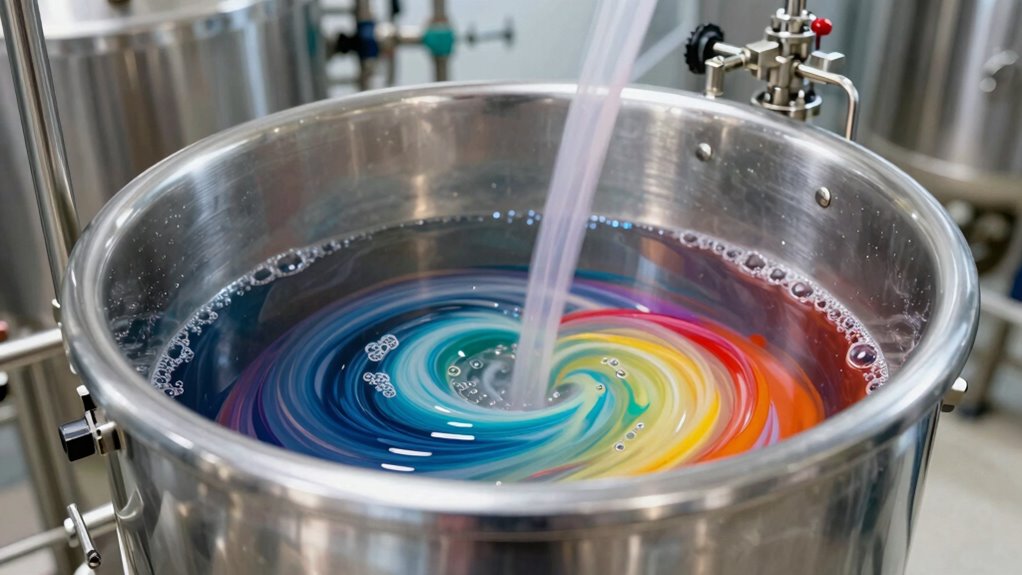

Mixing tanks are more important than you might think because they guarantee your everyday products are safe, effective, and consistent. They control temperature and promote thorough blending, preventing separation and reducing the risk of defects. Proper tank design and advanced process control optimize manufacturing, especially in pharma, food, and cosmetics industries. Understanding these essential factors can reveal how they impact product quality behind the scenes—continue exploring to learn more about their indispensable role.

Get kitchen staples and gadgets delivered free with Prime
- Fast, free delivery on millions of items
- Prime Video, Amazon Music and more included
- Member-only deals all year
Key Takeaways
- Ensure product quality, consistency, and safety across industries like pharmaceuticals, food, and cosmetics.
- Precisely control temperature and mixing to prevent undesirable chemical reactions and maintain stability.
- Advanced tank design and process control optimize efficiency, reduce errors, and improve final product uniformity.
- Proper mixing tanks help meet strict regulatory standards and prevent defective products reaching consumers.
- Technological innovations enhance process reliability, improve product efficacy, and support high-quality manufacturing.
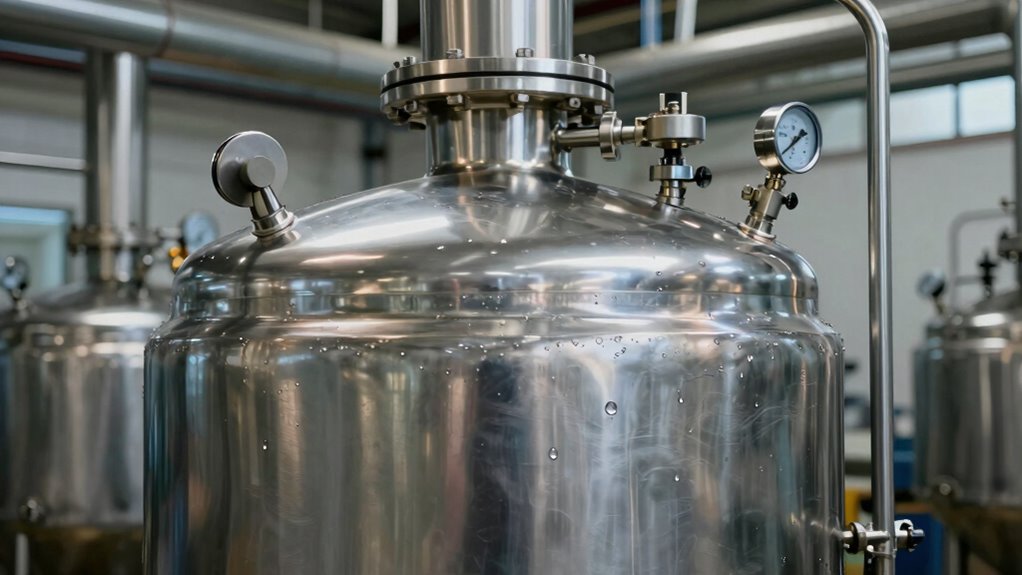
Have you ever wondered why mixing tanks are essential in various industries? These vessels play a crucial role in guaranteeing the quality and consistency of many products you rely on daily. At the core of their importance is their ability to maintain chemical stability during the manufacturing process. When different raw materials are combined, reactions can occur that might compromise the final product’s integrity if not properly managed. Mixing tanks are designed to promote thorough blending, preventing separation or inconsistent chemical composition. This control over the mixture guarantees that each batch meets strict quality standards, which is vital in industries like pharmaceuticals, food production, and cosmetics. Without reliable mixing tanks, achieving uniformity becomes much more difficult, increasing the risk of defective products reaching consumers.
Another critical aspect of mixing tanks is temperature control. Many chemical reactions are highly sensitive to temperature fluctuations, which can affect the stability and safety of the final product. Proper temperature regulation within these tanks helps prevent undesirable reactions, such as decomposition or unwanted side reactions, that could ruin the batch or pose safety hazards. Advanced mixing tanks often come equipped with heating or cooling systems, allowing precise control over internal temperatures during mixing and processing. This guarantees that ingredients are combined under ideal conditions, preserving their chemical properties and ensuring the product’s effectiveness. For example, in pharmaceutical manufacturing, maintaining the right temperature during mixing can mean the difference between a safe, effective medicine and a compromised batch. Additionally, temperature control is essential for meeting regulatory standards and ensuring product safety across various industries. Furthermore, implementing proper mixing techniques can greatly enhance the efficiency and uniformity of the final product, emphasizing the importance of well-designed mixing tanks in the manufacturing process. Proper tank design also plays a vital role in optimizing these processes and ensuring consistent results. Proper process control within the tanks further ensures that each step of manufacturing adheres to strict quality protocols, minimizing errors and variability. Moreover, advancements in CAD and 3D modeling can help engineers design more efficient and effective mixing tanks, further improving process outcomes.
stainless steel mixing tanks for pharmaceuticals
As an affiliate, we earn on qualifying purchases.
As an affiliate, we earn on qualifying purchases.
Frequently Asked Questions
What Are the Different Types of Mixing Tanks Available?
You can choose from various mixing tanks based on your needs, like stainless steel, glass-lined, or plastic tanks. They come in different tank capacities to suit small or large-scale operations. Mixing mechanisms vary too, including impellers, agitators, or paddles, ensuring thorough blending. Selecting the right type depends on your material, volume, and mixing requirements, making it essential to understand these options for peak results.
How Do Mixing Tanks Improve Product Consistency?
Mixing tanks improve product consistency by ensuring ingredient uniformity, which means each batch has the same quality and flavor. They facilitate thorough blending, reducing the risk of uneven components. This process also boosts process optimization by allowing precise control over mixing times and speeds. As a result, your products maintain high standards, meet customer expectations, and reduce waste, making mixing tanks essential for reliable, high-quality production.
What Materials Are Used to Manufacture Mixing Tanks?
You might think mixing tanks are just big metal boxes, but they’re crafted from stainless steel, carbon steel, or even plastics, depending on your needs. They include tank insulation to keep temp stable and guarantee material compatibility, preventing corrosion or contamination. Choosing the right materials isn’t just a detail—it’s like giving your product a cozy, compatible home, making sure everything mixes smoothly without a hitch.
How Often Should Mixing Tanks Be Maintained?
You should perform regular maintenance on your mixing tanks, typically every 3 to 6 months, depending on usage and materials involved. Follow strict cleaning protocols to prevent contamination, and always adhere to safety procedures during maintenance. Regular inspections help identify wear and tear early, ensuring peak performance and safety. Proper maintenance not only extends the tank’s lifespan but also maintains product quality and compliance with industry standards.
Can Mixing Tanks Handle Hazardous or Corrosive Materials?
Mixing tanks can handle hazardous or corrosive materials if they’re designed with proper chemical compatibility and safety protocols in mind. You need to guarantee the tank’s materials resist corrosion and won’t react adversely with the chemicals. Always follow strict safety procedures, including proper sealing, ventilation, and protective gear, to prevent accidents. Consulting with manufacturers about chemical compatibility and safety standards is essential before handling such materials.
Conclusion
You might think mixing tanks are just a simple part of the process, but they actually play a essential role in ensuring quality, consistency, and efficiency. Some may worry that upgrading or maintaining them isn’t worth the hassle or cost, but neglecting these tanks can lead to costly mistakes or product failures. Trust me, investing in well-designed mixing tanks pays off in smoother operations and better results—making them more indispensable than you might initially realize.
Fall Picks
fall essentials
As an affiliate, we earn on qualifying purchases.