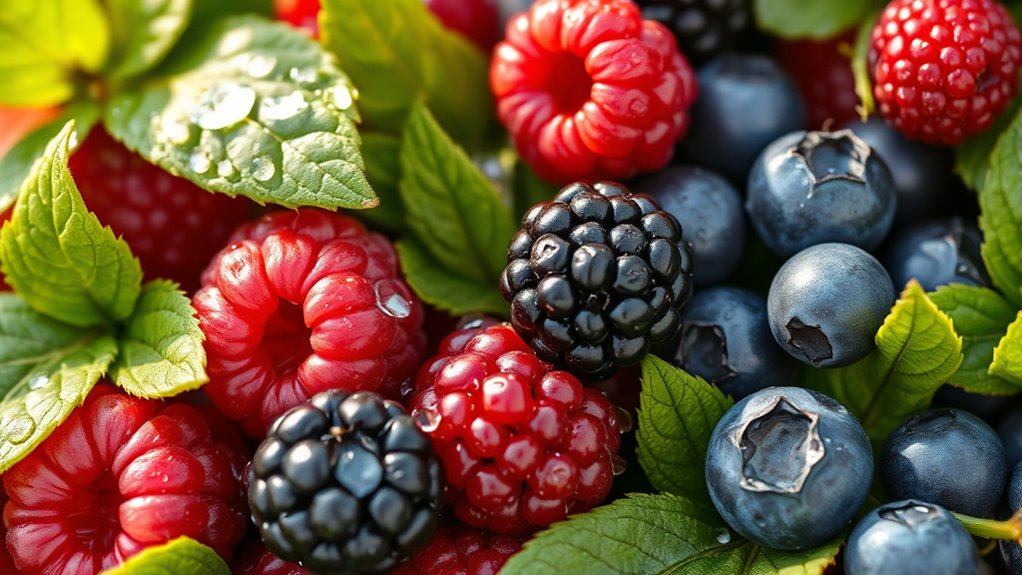

For wild-harvested fruits suitable for natural juices, identify local berries like blackberries, elderberries, and gooseberries carefully using trustworthy guides or apps. Harvest only healthy, ripe fruits with clean tools and avoid overharvesting to support plant health and wildlife. Pay attention to seasonal and weather cues for the best flavor and quality. Following responsible practices guarantees vibrant, tasty juices and helps maintain nature’s balance—continue to discover how to harvest and make the most of wild fruits.
Key Takeaways
- Identify wild fruits accurately using reliable guides to ensure safety and optimal flavor.
- Harvest from pristine, undamaged plants away from pollution and busy roads for clean, high-quality produce.
- Collect fruits during their peak ripeness in their seasonal window for maximum nutrients and flavor.
- Harvest fruits post-rain for juicier, more flavorful juices, while avoiding overly wet or mold-prone conditions.
- Use proper techniques like scissors or pruning shears to minimize plant damage and preserve future harvests.

Wild-harvested fruits offer a pure and flavorful foundation for natural juices, allowing you to enjoy the true taste of nature. When you set out to gather these fruits, it’s essential to keep some foraging tips in mind. First, always identify plants with certainty before harvesting; misidentification can lead to consuming inedible or toxic varieties. Carry a reliable field guide or use plant identification apps to verify your finds. Pay attention to seasonal variations, as different fruits ripen at different times of the year. Knowing when specific berries, such as blackberries or elderberries, peak ensures you pick them at their sweetest and most nutritious. Timing your foraging trips during the right season maximizes the flavor and abundance of your harvest.
While foraging, observe the environment carefully. Look for healthy, undamaged fruits growing on well-established plants away from pollution, busy roads, or treated areas. Fruits from pristine, wild sources tend to be more flavorful and safer for juice-making. It’s also wise to harvest responsibly—leave enough fruit behind for wildlife and future growth. Use scissors or pruning shears to collect the fruits gently, avoiding damage to the plant or surrounding growth. Always check local regulations; some areas may have restrictions or protected species that you should respect.
Harvest responsibly from healthy, wild plants away from pollution and protected areas for safer, more flavorful juice ingredients.
Seasonal variations profoundly influence not only what fruits are available but also their flavor profiles and nutrient content. For example, early summer might bring ripe strawberries and gooseberries, while late summer offers a bounty of blackberries and elderberries. Fall could see the harvest of apples, crabapples, and persimmons, each adding unique flavors to your juices. Understanding these variations helps you plan your foraging trips more effectively, ensuring you gather the best produce for your homemade juices.
Additionally, consider the weather conditions. After a good rain, fruits tend to be juicier and more flavorful, but overly wet conditions might lead to mold or spoilage. Sun-drenched days often yield fruits with concentrated sugars, perfect for a naturally sweet juice. Be mindful of these factors to optimize your harvest and create vibrant, delicious juices that showcase the season’s bounty. Proper harvesting techniques ensure the longevity and quality of your fruits. By paying attention to foraging tips and seasonal variations, you’ll deepen your connection to nature’s rhythms and craft juices that truly capture the essence of wild, fresh fruits.
Frequently Asked Questions
Are Wild-Harvested Fruits Organic and Pesticide-Free?
Wild-harvested fruits are generally organic and pesticide-free because they grow naturally without chemical interventions. Their diverse habitats support wild fruit diversity, which contributes to unique flavors and nutritional profiles. When you harvest using sustainable techniques, you help preserve ecosystems and guarantee the fruits remain free from artificial chemicals. So, by choosing wild-harvested fruits, you’re likely getting pure, pesticide-free options that celebrate natural growth and biodiversity.
How Do I Identify Safe Wild Fruits for Harvesting?
Think of wild fruits as hidden treasures waiting to be uncovered. To identify safe ones, learn to spot edible plants and distinguish them from toxic look-alikes. Use a reliable field guide, observe the fruit’s color, shape, and growth pattern, and check if the plant has any distinct features. Always test small amounts first and consider consulting local experts. When in doubt, it’s better to leave it than risk poisoning.
What Is the Best Season for Harvesting Wild Fruits?
You should harvest wild fruits during their peak seasonal fruiting, which varies by region and climate. Typically, late summer to early fall offers the best harvest time, as fruits are most abundant and flavorful. Keep climate considerations in mind, as weather patterns can affect ripening. Monitoring local seasonal cues and understanding your area’s climate helps guarantee you pick fruits at their prime for safe and delicious natural juices.
How Do I Store Wild-Harvested Fruits to Maintain Freshness?
Imagine your wild-harvested fruits as treasures waiting to be preserved. To extend their fruit shelf life, store them in airtight storage containers in the refrigerator’s crisper drawer. Handle with care to prevent bruising, and consume within a few days for maximum freshness. For longer storage, consider freezing in single layers before transferring to containers. This way, your wild fruits stay vibrant, juicy, and ready whenever you need them.
Are There Any Legal Restrictions on Wild Fruit Harvesting?
You need to check local legal regulations before harvesting wild fruit, as rules vary by area. Some places require harvesting permits, especially for protected or endangered species, to guarantee sustainable practices. Failing to follow these regulations can lead to fines or legal issues. Always research specific laws and obtain necessary permits beforehand, respecting conservation efforts and local authorities’ guidelines to harvest responsibly and legally.
Conclusion
By choosing wild-harvested fruits for your natural juices, you embrace purity, support sustainability, and enjoy vibrant flavors. You connect with nature, nourish your body, and preserve traditions. You savor the freshness, celebrate the diversity, and promote eco-friendly practices. Wild-harvested fruits offer more than just juice—they offer a way to live consciously, taste authentically, and appreciate the wild beauty around you. Make the switch, and let nature’s bounty refresh your life.

Cindy thoroughly researches juicing trends, techniques, and recipes to provide readers with practical advice and inspiration. Her writing style is accessible, engaging, and designed to make complex concepts easy to understand. Cindy’s dedication to promoting the advantages of juicing shines through her work, empowering readers to make positive changes in their lives through the simple act of juicing.