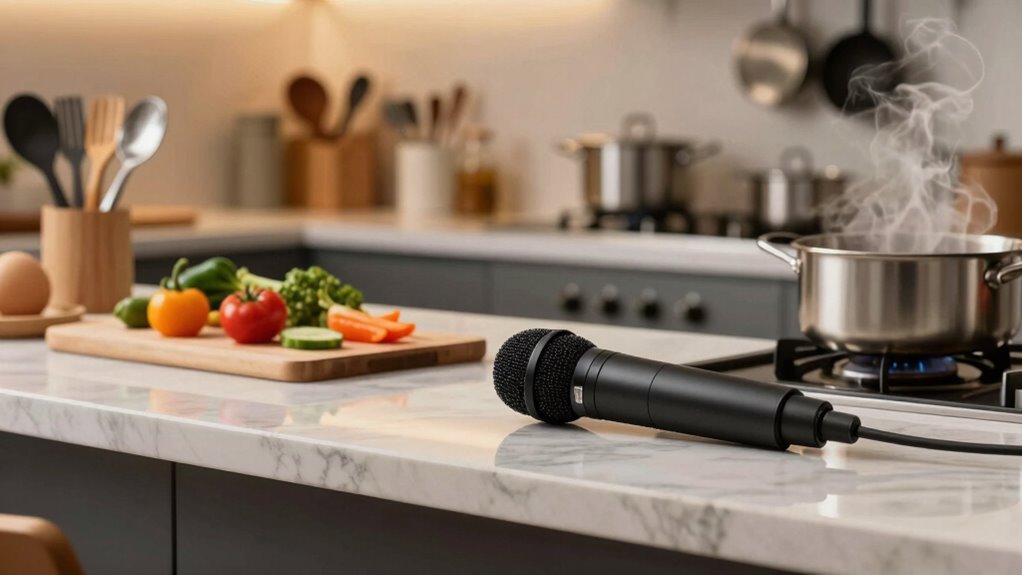

Using wireless mics in a kitchen can lead to noise problems caused by interference from appliances, walls, and electrical devices. To improve sound quality, position your equipment carefully, stay close to the transmitter, and choose less congested frequency bands. Elevating microphones and testing setups before recording also help reduce static and dropouts. Want to discover more tips on overcoming these challenges? Keep exploring to guarantee your audio stays clear despite kitchen chaos.
Key Takeaways
- Choose less congested frequency bands to reduce interference from Wi-Fi and other electronic devices.
- Elevate microphones and keep transmitters close to the receiver for stronger, clearer signals.
- Test the setup in the actual kitchen environment to identify and address dead spots or weak signals.
- Minimize electronic clutter and keep devices away from the microphone setup to prevent static and noise.
- Regularly verify interactions with other gadgets to ensure consistent audio quality during recordings.
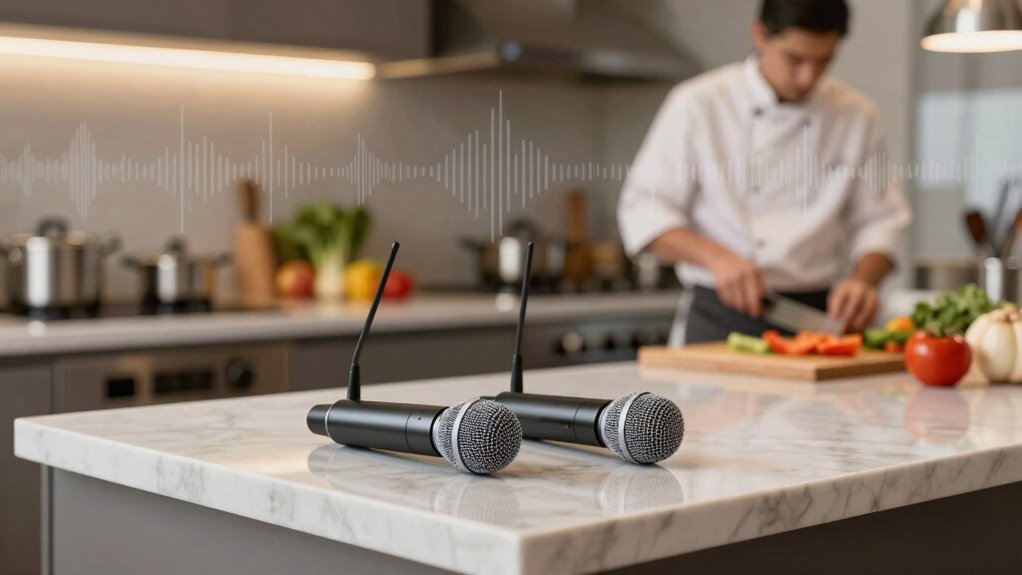
Wireless microphones are transforming the way home chefs and food enthusiasts communicate and share their culinary experiences. Whether you’re recording a cooking tutorial, live streaming your latest recipe, or just chatting with friends while you cook, wireless mics make it easier to stay hands-free and focused on what matters most—your food. However, despite their convenience, wireless mics come with challenges, especially in a bustling kitchen environment. One of the biggest issues you’ll face is audio interference, which can disrupt your recordings and make your voice hard to hear. This interference often results from overlapping signals, electronic devices, or structural obstacles that block or weaken the wireless signal. To verify crystal-clear audio, you need to pay close attention to how your microphone interacts with other electronic gadgets and the layout of your kitchen.
Another critical factor to contemplate is the signal range. Most wireless mics have a specified range, but real-world conditions often reduce this distance. Walls, appliances, and even the presence of metal fixtures can considerably limit how far your microphone can pick up sound without dropouts or static. If your kitchen is large or filled with multiple devices, you might find that your microphone’s signal doesn’t reach where you need it to, creating gaps in your audio or forcing you to stay close to the transmitter. To combat this, choose a microphone with a sufficient range for your space and test it in your kitchen environment before recording important content. This way, you can identify and address dead spots or areas where the signal weakens.
Additionally, you should consider the frequency bands your wireless mic uses. Some frequencies are crowded with other wireless devices or Wi-Fi networks, increasing the likelihood of audio interference. Opting for a model that operates on less congested frequencies can help maintain a stable connection and reduce static or dropouts during your recording sessions. When setting up your equipment, keep the transmitter and receiver as close as possible and avoid placing other electronic devices between them. Elevate the microphone’s placement to minimize physical obstructions, and ensure that your Wi-Fi router or cordless phones are not operating on the same frequency band.
Being aware of and mitigating interference sources is essential to maintaining high-quality audio in your kitchen setup.
Frequently Asked Questions
How Can I Reduce Interference From Other Wireless Devices?
To reduce interference from other wireless devices, identify major interference sources like Wi-Fi routers, Bluetooth gadgets, and microwaves. Change your mic’s frequency to a less crowded channel, ensuring better signal stability. Keep your wireless mics away from potential interference sources, and use a frequency scanner to find clear channels. Regularly monitor and adjust settings to maintain a strong, stable signal, minimizing noise and boosting audio quality during use.
What Are the Best Frequency Options for Kitchen Environments?
You should prioritize selecting frequencies in the 470-698 MHz range for better signal clarity in kitchen environments. Using clear, less congested frequencies helps minimize interference from other wireless devices. Opt for digital or UHF bands, as they offer more stable connections and less noise. Always scan your environment first, so you can choose the best frequency options that guarantee reliable communication and reduce background noise during your tasks.
How Does Microwave Oven Usage Affect Wireless Mic Signals?
Microwave oven usage can cause significant microwave interference, leading to signal disruption in your wireless mic system. When the microwave operates, it emits signals in the 2.4 GHz frequency range, which overlaps with many wireless mic channels. To minimize this, avoid using wireless mics on the same or nearby frequencies when the microwave is on, or switch to a different frequency band less affected by microwave emissions, ensuring clear audio.
Are There Specific Wireless Microphone Brands Suited for Kitchens?
You should consider brands like Sennheiser and Shure for kitchen use, as they offer models with excellent brand compatibility and durability. These mics are built to withstand heat, moisture, and frequent handling, reducing durability concerns. Look for wireless systems with robust shielding against interference, ensuring clear sound even with microwave ovens and other electronic devices operating nearby. Choosing the right brand helps maintain reliable performance in busy kitchen environments.
How Can I Improve Microphone Clarity Amid Background Kitchen Noise?
To improve microphone clarity amid kitchen noise, focus on soundproofing techniques and strategic microphone placement. Use directional microphones to pick up your voice while minimizing background sounds. Position the mic close to your mouth and away from noisy appliances. Implement soundproof barriers or curtains to dampen ambient noise. Combining these methods guarantees your voice stays clear, allowing your message to cut through even the busiest, loudest kitchen environment.
Conclusion
Just like a chef carefully balances flavors, balancing wireless mics in your kitchen means managing interference before it spoils your performance. Imagine hosting a dinner party where every word is clear—without static or dropouts ruining the moment. When you prioritize proper setup and troubleshoot early, you prevent noise from becoming the unexpected guest that ruins the experience. By addressing this now, you make certain your kitchen stays a place of perfect harmony, not chaos.