
To avoid seed bitterness and tannins when pressing berries, choose ripe, high-quality fruit with a good sugar-acid balance. Crush the berries gently to release juice without breaking seeds excessively, and consider pre-treating with a quick blanch or cold soak to soften seed membranes. Managing pectin levels with enzymes like pectinase can also improve clarity and reduce bitterness. With these tips, you’ll produce a smoother, clearer juice—keep exploring to discover even more effective techniques.
Key Takeaways
- Select fully ripe berries to minimize seed bitterness and tannin extraction.
- Gently crush berries to release juice without breaking seeds excessively.
- Use enzymatic treatments like pectinase to break down pectin and improve clarity.
- Filter juice through fine mesh or cheesecloth to remove seed particles and reduce bitterness.
- Pre-treat berries with quick blanch or cold soak to soften seed membranes and limit tannin leaching.
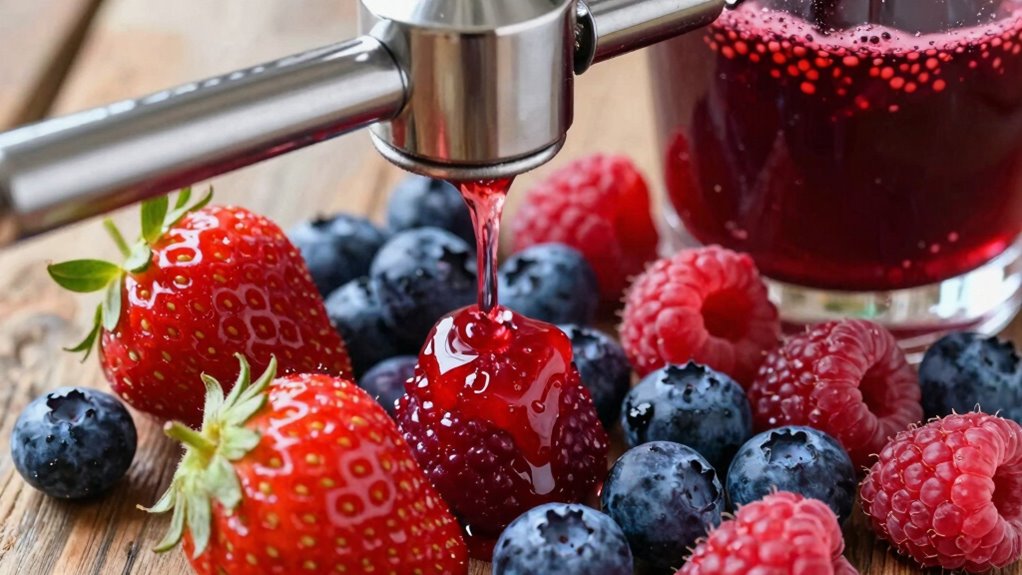
Have you ever wondered how to extract the freshest juice from berries? The secret isn’t just in crushing them but in understanding how to manage their natural components to achieve a smooth, flavorful result. When pressing berries, one common challenge is dealing with seed bitterness and tannins, which can ruin the taste if not handled properly. To minimize these unwanted flavors, it’s essential to understand the role of fruit pectin and how it influences juice clarification. Fruit pectin, a natural thickening agent found in berries, can cause the juice to become cloudy if not properly managed. While pectin helps hold the fruit’s structure, it can also trap particles and cloud the juice, making clarification necessary for a clear, appealing final product.
Managing fruit pectin is key to clear, flavorful berry juice.
To avoid seed bitterness and tannins, start by selecting ripe, high-quality berries. Ripe berries have a more balanced sugar-to-acid ratio and tend to produce less bitter juice. When preparing to press, gently crush the berries to release their juice without breaking the seeds excessively. Seeds contain bitter compounds and tannins that, when crushed, can leach into the juice, imparting undesirable flavors. To further reduce bitterness, consider a pre-treatment step like a quick blanch or cold soak, which can help soften seed membranes and lessen tannin extraction.
Once you’ve crushed the berries, the next step involves juice clarification. This process helps remove seed particles, pulp, and residual solids that contribute to cloudiness and bitterness. Using a fine mesh strainer or cheesecloth, strain the juice slowly, allowing the liquid to pass through while trapping solids. For a clearer juice, some prefer to use a gentle centrifuge or a commercial juice clarifier, which can efficiently separate suspended particles. During this process, it’s important to avoid vigorous stirring, as it can re-suspend solids and hinder clarification.
In addition to physical filtering, enzymatic treatments can assist in breaking down pectin chains, making it easier to clarify the juice. Enzymes like pectinase are commonly used in commercial settings to degrade pectin, resulting in a brighter, more transparent juice. This step is particularly helpful when working with high-pectin berries, ensuring that juice clarity is achieved without sacrificing flavor. Proper handling of pectin not only enhances the visual appeal but also reduces the likelihood of seed bitterness lingering in the final product.
As an affiliate, we earn on qualifying purchases.
Frequently Asked Questions
Can Pressing Berries Cause Fermentation or Spoilage?
Pressing berries can cause fermentation risks if you leave the juice exposed to air or don’t refrigerate it promptly. To prevent spoilage, you should press berries carefully, keep the juice refrigerated, and use proper sterilization techniques. Avoid leaving the juice out for too long, and consider adding preservatives if necessary. This will help you prevent fermentation and spoilage, ensuring your berry juice stays fresh and safe to drink.
What Types of Berries Are Best Suited for Pressing?
Think of pressing berries as tending a delicate garden. Opt for soft, juicy berry varieties like blackberries, raspberries, and boysenberries, which are best suited for pressing. Your pressing techniques matter; gentle, slow pressure prevents bitter seed extraction and tannin release. By choosing the right berry varieties and applying proper pressing methods, you’ll craft a flavorful, smooth juice that captures the essence of your harvest without unwanted bitterness.
How Does Pressing Affect the Nutritional Content of Berries?
When you press berries, nutrient retention can decrease if the process exposes enzymes that break down vitamins and antioxidants. Active enzyme activity may lead to the loss of some nutrients, especially vitamin C and polyphenols. To preserve nutritional content, press berries gently and promptly refrigerate or consume the juice. This helps minimize enzyme activity and maintain the maximum health benefits of your pressed berries.
Is There a Difference Between Cold and Hot Pressing?
You might think all pressing methods are the same, but temperature control makes a big difference. Hot pressing uses higher temperatures, which can extract more juice but risk releasing bitter seed oils and tannins. Cold pressing, on the other hand, keeps temperatures low, preserving freshness and flavor while minimizing bitterness. Choosing the right extraction method depends on your goal—whether you want maximum yield or a smoother, more delicate taste.
How Long Should Pressed Berry Juice Be Stored?
You should store pressed berry juice for up to 3-5 days in the refrigerator to prevent spoilage. Make sure to keep it in an airtight container to prevent oxidation and microbial growth. If you want to extend storage, consider freezing the juice for up to 6 months, which helps prevent spoilage and preserves flavor. Always check for signs of spoilage before consuming, such as off smell or mold.
Conclusion
To avoid seed bitterness and tannins, you need to understand, control, and refine your pressing process. Know your berries, control your pressure, and refine your technique. By doing so, you prevent bitterness, reduce tannins, and enhance flavor. Keep these steps in mind, stay attentive to details, and enjoy the perfect press every time. Because when you master these steps, you master the art of berry pressing—creating pure, delicious results that satisfy every time.