
You’ll find that fruit juices are higher in potassium and magnesium, which support muscle and heart health, while vegetable juices tend to have more calcium and iron, essential for strong bones and oxygen transport. These differences influence flavor and nutrition, with preserving methods also affecting mineral levels. Fresh or cold-pressed options keep more of these minerals intact. To discover how specific produce impacts mineral content and flavor, keep exploring the details below.

Get kitchen staples and gadgets delivered free with Prime
- Fast, free delivery on millions of items
- Prime Video, Amazon Music and more included
- Member-only deals all year
Key Takeaways
- Fruits typically have higher potassium and magnesium, influencing their mineral profile compared to vegetables.
- Vegetables generally contain more calcium and iron, which are less prevalent in fruits.
- Preservation methods, like pasteurization or cold-pressing, can alter mineral levels in juices.
- Processing and fortification can modify natural mineral content, affecting flavor and nutritional value.
- Mineral content variability depends on produce type and preservation techniques, impacting juice mineral shifts.

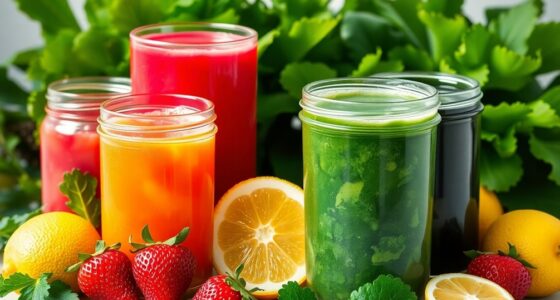
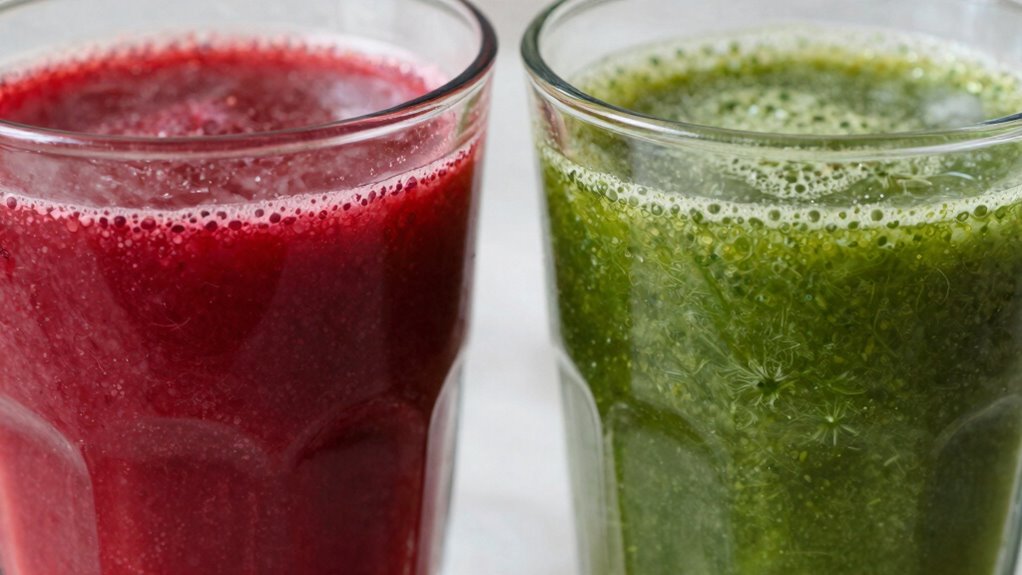
Juices are a popular way to boost your daily intake of essential minerals, but not all beverages are created equal in their mineral content. When you choose between fruit and vegetable juices, you’ll notice their mineral profiles differ considerably, largely due to the natural composition of the produce. Fruits tend to be higher in certain minerals like potassium and magnesium, which support your muscle function and heart health, while vegetables often offer more calcium and iron, essential for strong bones and oxygen transport. These differences influence not only your nutritional intake but also the flavor enhancement that each juice provides, shaping your overall taste experience.
The mineral content in juices is heavily impacted by preservation techniques. Freshly squeezed juices retain most of their natural minerals, but as soon as processing begins, some mineral levels can diminish. Pasteurization, for example, helps extend shelf life but may slightly reduce mineral concentrations, especially if high heat causes mineral leaching or degradation. Conversely, cold-pressed juices tend to preserve more of these nutrients, maintaining their mineral richness. You can also find fortified juices where minerals are added deliberately, ensuring consistent intake regardless of the natural mineral variability in produce. This approach helps you meet your mineral needs even when the original fruits or vegetables are low in certain minerals. Additionally, preservation methods play a crucial role in maintaining the mineral profile of juices, affecting both their nutritional value and flavor. Understanding these techniques can help you make better choices for maximizing nutrient retention. Moreover, minerals in juices can interact with other nutrients, influencing their absorption and bioavailability.
When considering flavor enhancement, it’s important to note that mineral content subtly influences taste. For example, higher magnesium levels can impart a slightly bitter or earthy note, while potassium contributes to a smoother, sweeter profile. These mineral-driven flavor nuances make some juices more appealing and can influence your preference. Preservation techniques play a role here, too; methods that preserve minerals better often result in a more authentic, natural flavor. You might find that fresh or minimally processed juices deliver a more vibrant taste experience, whereas heavily processed ones might lack some of these subtle mineral-driven flavor notes.
As an affiliate, we earn on qualifying purchases.
Frequently Asked Questions
How Does Soil Quality Influence Mineral Levels in Fruits and Vegetables?
Soil quality directly affects mineral levels in fruits and vegetables by influencing soil composition. Healthy, nutrient-rich soil enhances nutrient absorption, allowing your crops to take up essential minerals like calcium, magnesium, and iron more effectively. When soil is depleted or poorly maintained, mineral content decreases, resulting in less nutritious produce. To maximize mineral levels, focus on improving soil health through proper fertilization, crop rotation, and organic matter addition.
Do Organic Juices Have Higher Mineral Content Than Conventional Ones?
Sure, organic juices often boast higher mineral content because organic farming encourages better mineral absorption from the soil. Think of it as plants taking a luxurious mineral spa treatment, soaking in nutrients free from synthetic chemicals. You get more of those essential minerals in your juice, making it a tastier, more nutritious choice. So, yes, organic juices generally pack a more mineral-rich punch than their conventional counterparts.
How Does Storage Affect Mineral Retention in Juice Products?
Storing juice for longer durations, especially beyond a few days, can decrease its mineral content due to ongoing degradation. Refrigeration slows this process, preserving minerals better than room temperature storage. The effects of refrigeration help maintain mineral levels by limiting enzyme activity and microbial growth. To maximize mineral retention, consume your juice promptly and keep it refrigerated, ideally within 48 hours of opening, to enjoy its nutritional benefits fully.
Are There Seasonal Variations in Mineral Content of Fruits and Vegetables?
Imagine biting into a summer peach, its flavor vibrant and sweet—seasonal changes directly influence mineral content in fruits and vegetables. You’ll notice flavor variation throughout the year, driven by soil, climate, and harvest timing, which affect mineral levels. Consumer preferences shift with these variations, as some prefer the richer taste of winter root vegetables or summer berries. So, seasonal mineral differences naturally impact the nutritional profile and taste of your produce.
What Processing Methods Best Preserve Mineral Nutrients in Juices?
You should opt for cold-pressed techniques and enzymatic preservation to best maintain mineral nutrients in juices. Cold pressing minimizes heat exposure, helping retain minerals and enzymes that degrade with heat. Enzymatic preservation involves adding natural enzymes to slow nutrient loss during processing. These methods guarantee your juices retain maximum mineral content, offering more health benefits. Always choose fresh, minimally processed juices for ideal mineral preservation.
Conclusion
As you compare fruit and vegetable juices, you’ll notice minerals dance between the two—vitamins often take center stage, but minerals quietly shift, shaping your health. While fruit juices burst with sweetness and potassium, vegetables offer a steadier supply of magnesium and calcium. Just like a balanced diet, understanding these mineral shifts helps you make smarter choices. So, savor the vibrant flavors and let the mineral nuances guide your journey toward better wellness.
NFL season / tailgating Picks
team gear
As an affiliate, we earn on qualifying purchases.