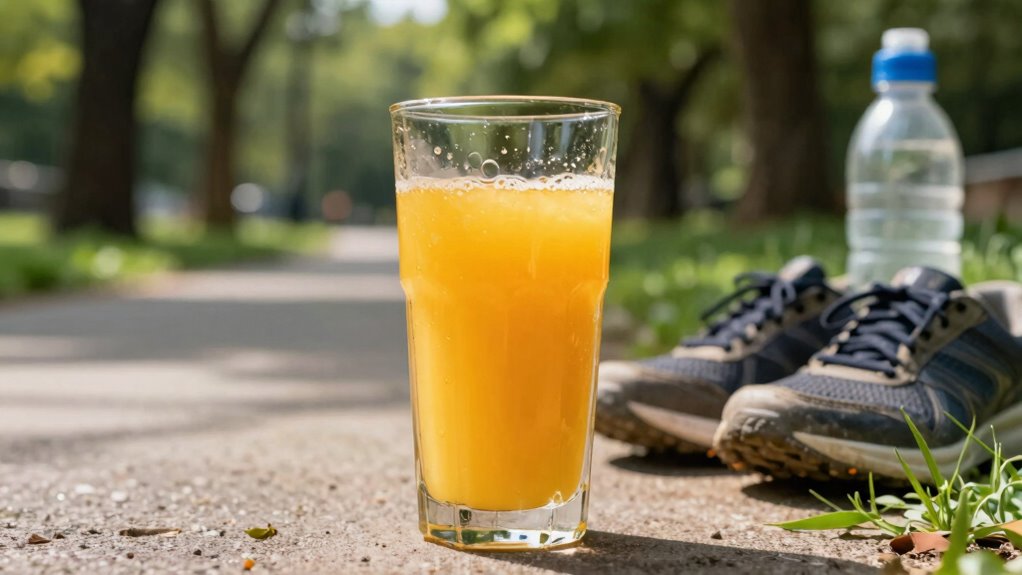

Many people prefer drinking juice before a walk or workout because it provides rapid energy from simple sugars, helping you perform better and stay active longer. Juice also keeps you hydrated with natural electrolytes and water, reducing the risk of dehydration. Plus, the vitamins and antioxidants support your immune system and aid recovery. If you continue, you’ll discover even more ways juice can boost your exercise experience and overall health.
Key Takeaways
- Juices provide quick, easily digestible sugars for immediate energy before physical activity.
- They help maintain hydration and electrolyte balance during walks or workouts.
- Juices supply vitamins and antioxidants that support immune health and recovery.
- They offer a convenient, tasty way to boost energy without feeling heavy or bloated.
- Diluted juice manages sugar spikes, providing sustained energy without crashes.
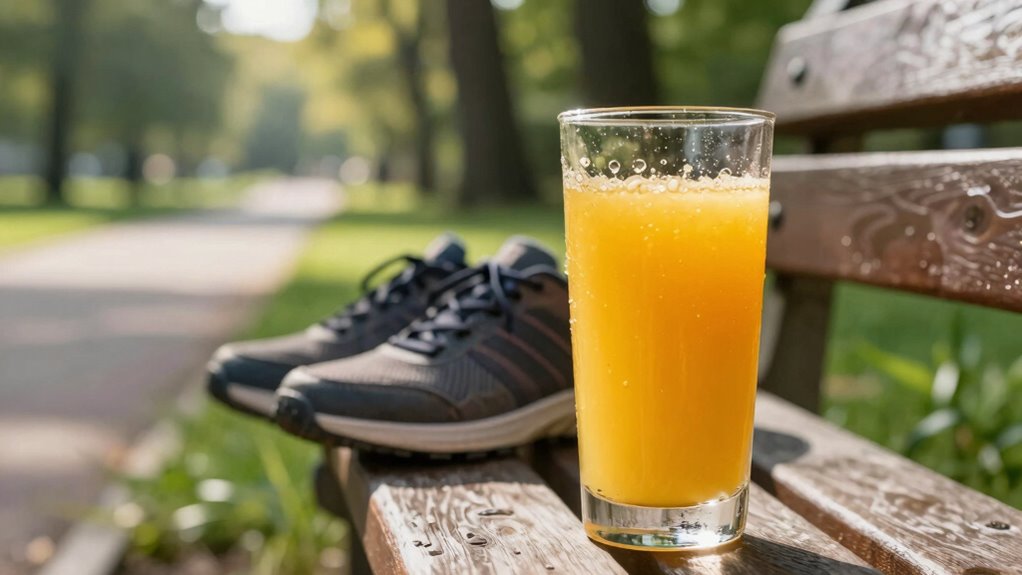
Drinking juice before a walk or workout can give you a quick energy boost, helping you perform better and feel more energized. Many people choose juice as their pre-exercise fuel because it’s easy to digest and provides a natural source of carbohydrates. When you consume juice, especially a light, fruit-based one, you’re delivering simple sugars directly to your bloodstream, which can be quickly converted into usable energy. This immediate energy kick can be especially helpful if you’re heading into a workout or walk on an empty stomach or after a long day without much fuel.
One of the key reasons you might prefer juice before exercising is for its hydration benefits. Although water is the best for hydration, juice contains a significant amount of water along with electrolytes naturally present in fruits, which can help maintain your fluid balance during physical activity. Staying well-hydrated is essential for optimal performance, and the liquid content in juice makes it a refreshing choice. Plus, the vitamins and antioxidants found in juice can support your immune system and reduce inflammation, helping your body recover faster after exercise. Incorporating natural hydration strategies like consuming juice can be especially important if you’re engaging in prolonged or intense physical activity.
However, you should be aware of the sugar content in juice, especially if you’re watching your intake or have specific health goals. Many commercial juices pack a lot of natural sugars, which provide quick energy but can also lead to a sugar spike followed by a crash. If you tend to feel sluggish after a sugary snack or drink, you might want to choose juices with lower sugar levels or dilute your juice with water for a more gradual release of energy. The sugar content in juice can be beneficial if managed properly, as it supplies immediate glucose needed for muscle function, but overdoing it can counteract your fitness efforts. Managing sugar intake is important to maximize benefits and minimize potential drawbacks.
Some people prefer juice before a workout because it’s convenient and tastes good, often making it easier to stick with a routine. It’s a quick source of carbs that your body readily absorbs, giving you that much-needed energy push without feeling heavy or bloated. Plus, the natural sweetness can satisfy cravings without resorting to processed snacks or energy drinks packed with artificial ingredients. Just be mindful of portion sizes and choose juices that are 100% fruit without added sugars to maximize the hydration benefits and keep the sugar content in check. Incorporating a balanced approach to juice consumption can help you optimize your energy and hydration without overdoing the sugars.

Nutrology Beet Active Pre Workout Passion Fruit Flavor – 30 Servings
- Natural Pre-Workout Powder: Supports workout naturally with beet root
- Boosts Energy and Focus: Enhances stamina and mental clarity
- Supports Nitric Oxide Production: Improves blood flow to muscles
As an affiliate, we earn on qualifying purchases.
As an affiliate, we earn on qualifying purchases.
Frequently Asked Questions
Can Juice Replace a Full Meal Before Exercise?
Juice can’t fully replace a meal before exercise because it’s usually low in protein and healthy fats, which are essential for sustained energy. While juice can serve as a quick meal substitution, it might cause digestive discomfort or energy crashes later. For better digestive comfort and lasting fuel, consider combining juice with small amounts of protein or healthy fats, or opt for a balanced meal instead of just juice before your workout.
Which Types of Juice Are Best for Pre-Workout Energy?
You’ll want juices with smart fruit combinations and moderate sugar content. Think apple-banana for sustained energy or orange-mango for quick carbs. Avoid overly sugary options like grape or pineapple alone, unless you enjoy a sugar crash mid-stride. These juices provide a balance of natural sugars and nutrients, fueling your workout without the crash. Remember, the right juice can make your walk or workout feel less like a chore and more like a treat.
How Much Juice Should I Drink Before Exercising?
You should aim to drink about 4 to 8 ounces of juice before exercising, depending on your individual needs. Keep an eye on the juice calorie and sugar content; opt for options with lower sugar and calories for sustained energy without a crash. Too much juice can lead to a sugar spike, causing discomfort or energy dips mid-workout. Adjust the amount based on how your body responds.
Are There Any Risks in Drinking Juice Before a Walk?
Drinking juice before a walk can sometimes lead to a sugar crash or gastrointestinal discomfort, making you feel sluggish or bloated. Your energy might spike then plummet faster than a rollercoaster, leaving you tired halfway through. If you have sensitive stomachs or consume too much, you risk nausea or cramps. To avoid these risks, opt for moderate portions and choose juices with less added sugar.
Does Juice Affect Hydration Levels During Exercise?
Juice can influence your hydration levels during exercise, especially if it has a balanced flavor combination that encourages you to drink it steadily. However, be mindful of the sugar content; high sugar levels may cause a quick energy spike followed by a crash, potentially affecting hydration. Drinking juice with moderate sugar and appealing flavor combos can help keep you hydrated and energized throughout your walk or workout.
Conclusion
Drinking juice before your walk or workout can boost your energy and keep you motivated. It’s a simple way to fuel your body with natural sugars and essential nutrients. Did you know that about 80% of Americans don’t get enough fruits and veggies daily? Including a small glass of juice can help bridge that gap, making your exercise sessions more effective and enjoyable. So, next time, consider a quick juice to power up your activity!