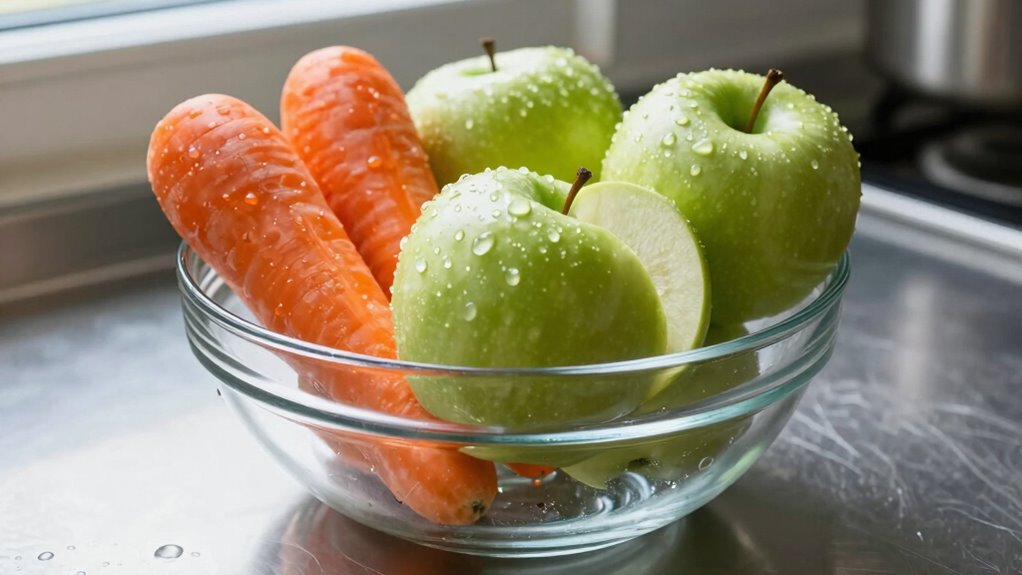

Your produce’s temperature before juicing matters because it affects freshness, flavor, and nutrients. Cold produce can be harder to juice and may reduce yield, while warm produce might be overripe or spoil quickly. Proper storage helps keep produce crisp and safe, preventing bacteria growth. Bringing produce to room temperature can improve extraction and flavor. If you want to find out how temperature specifically impacts different fruits and veggies, keep exploring.

Get kitchen staples and gadgets delivered free — and shop member deals
- Fast, free delivery on millions of items
- Access to Prime Big Deal Days deals on October 6–7
- Prime Video, Amazon Music and more included
Key Takeaways
- Proper temperature preserves produce freshness, flavor, and nutrients, enhancing the quality of the juice.
- Cold storage can reduce juice yield by limiting cell wall breakdown in produce.
- Bringing produce to room temperature before juicing improves juice extraction and flavor.
- Maintaining optimal temperature prevents bacterial growth and spoilage, ensuring safety.
- Correct temperature management extends produce shelf life and minimizes waste.
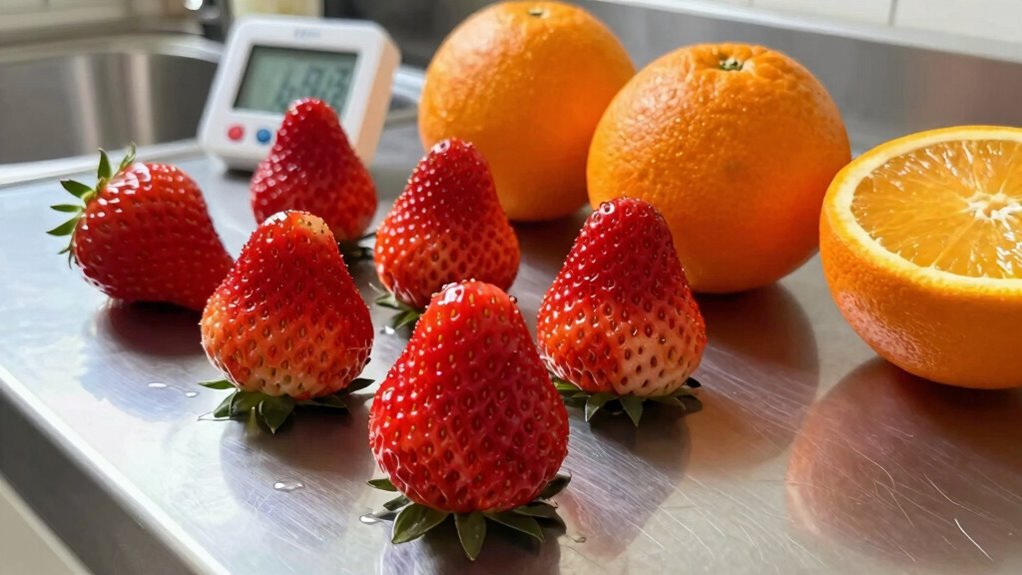
To get the best-tasting and most nutritious juice, it’s vital to evaluate the temperature of your produce before juicing. The temperature impact on your fruits and vegetables can greatly influence the quality of your final product. When produce is stored at the right temperature, it maintains freshness, flavor, and nutrient content. Conversely, improper storage techniques can lead to produce that’s either too cold or too warm, which affects juicing results and the health benefits you’re aiming for.
Evaluating produce temperature ensures optimal flavor, nutrition, and safety for your juicing experience.
If produce is stored in the fridge for too long or kept at overly cold temperatures, it may become chilled to the point where cell walls break down less easily during juicing. As a result, you might find that your juice lacks the vibrant flavor or that you need to extract more liquid than usual. On the other hand, produce that’s stored at room temperature or in warm environments can become overly ripe or even start to spoil, which impacts both taste and safety. Warm produce may also contain more bacteria, which isn’t ideal when you’re aiming for a clean, nutritious juice.
Understanding storage techniques is key to controlling the temperature impact on your produce. For instance, crunchy apples and crisp carrots are best kept in cool, dark places or the fridge to preserve their texture and nutritional content. Berries, which are delicate, should be stored in the fridge in breathable containers to avoid excess moisture and spoilage. When you’re ready to juice, take produce out of storage just before juicing to prevent it from warming up too much. Bringing items to room temperature can sometimes improve juice extraction, especially with fruits like apples or pears, since warmer produce tends to release more juice.
The timing and method of storage directly influence how well your produce maintains its qualities before juicing. When produce is stored at the right temperature, the cellular structure remains intact, leading to better flavor and higher nutrient retention. If produce is too cold, it might be less juicy and more difficult to process, while produce that is too warm might be less fresh and diminish the nutritional value. Proper storage techniques ensure your produce stays at an ideal temperature, which in turn enhances your juicing experience. Additionally, understanding produce temperature can help prevent spoilage and ensure safety when preparing your juice. Proper temperature control also minimizes bacterial growth, safeguarding both flavor and health. Maintaining the proper temperature can also extend produce freshness, reducing waste and ensuring optimal quality for your juices.
Ultimately, paying attention to produce temperature before juicing isn’t just about taste; it’s about maximizing nutrition and ensuring safety. By understanding how temperature impacts produce and employing the right storage techniques, you set yourself up for a smoother juicing process and a more delicious, healthful juice every time. Proper temperature management can make a significant difference in the overall quality of your juice.
As an affiliate, we earn on qualifying purchases.
Frequently Asked Questions
How Does Produce Temperature Affect Nutrient Retention During Juicing?
You affect nutrient retention during juicing by paying attention to produce temperature, as cooler fruits help preserve nutrient stability and enzyme activity. When produce is too warm, enzymes break down quickly, reducing the juice’s nutritional value. Keeping fruits chilled minimizes nutrient loss, ensuring you get the maximum health benefits. So, always refrigerate your produce before juicing to maintain the best nutrient profile and enzyme activity in your fresh juice.
What Is the Ideal Temperature Range for Different Fruits and Vegetables?
Think of produce storage as setting the stage for a perfect performance. For fruits, keep them between 35-40°F to preserve sweetness, while vegetables thrive in 32-38°F, maintaining crispness. Before juicing, let them warm slightly to around 50-60°F for ideal juice extraction. These temperature ranges guarantee your juicing techniques release the produce’s full flavor and nutrients, turning each glass into a vibrant, healthful symphony.
Can Warm Produce Cause Spoilage or Fermentation in the Juicer?
Warm produce can indeed cause spoilage or fermentation in your juicer if not stored properly. When you use produce that’s too warm, bacteria and yeasts thrive, increasing the risk of spoilage. To avoid this, always store your fruits and vegetables in cool, dry conditions before juicing. Keeping produce at proper temperatures helps spoilage prevention and ensures your juice stays fresh, safe, and delicious.
How Quickly Should Produce Be Cooled or Warmed Before Juicing?
You should cool or warm produce within 30 minutes of harvesting or storage to maintain ideal freshness and prevent spoilage. Proper produce handling and storage techniques involve quickly bringing produce to the right temperature—refrigerate cold items promptly and let warm produce reach room temperature before juicing. This quick adjustment helps preserve nutrients, flavor, and reduces fermentation risks, ensuring your juice is fresh and safe to consume.
Does Temperature Impact the Flavor or Texture of the Juice?
Yes, temperature impacts both flavor and texture of your juice. When produce is at ideal temperature, flavor enhancement occurs, making the juice taste fresher and more vibrant. Cooler produce helps preserve the texture, keeping the juice smooth and preventing it from becoming too watery or pulp-heavy. Warming produce slightly can intensify certain flavors, but too warm may cause spoilage or alter texture negatively. Proper temperature control ensures a balanced, delicious juice experience.
Conclusion
Remember, keeping your produce cold before juicing preserves its nutrients and enhances flavor. Did you know that chilled fruits and vegetables retain up to 20% more antioxidants? By simply refrigerating your produce, you’re not just improving taste—you’re maximizing health benefits. So next time, take that extra minute to cool your ingredients. Small steps like this make a big difference in your juice’s quality and your well-being. Stay mindful, stay healthy!
NFL season / tailgating Picks
team gear
As an affiliate, we earn on qualifying purchases.