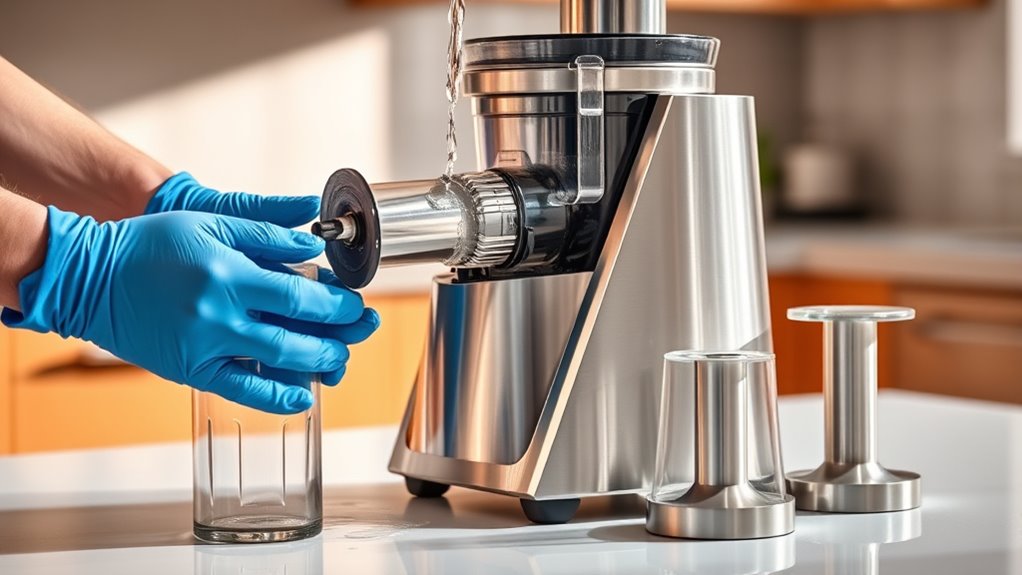
When setting up your first juicer, start by washing all removable parts with warm water and mild soap, then rinse and dry thoroughly. Follow the assembly instructions carefully, ensuring each piece is secured and safety locks engaged. During setup, keep your hands away from moving parts and check the power cord for damage. Operating on a stable surface and unplugging after use enhances safety. For detailed tips on each step, there’s more to explore.
Key Takeaways
- Wash all removable parts with warm water and mild soap, then rinse and dry thoroughly before first use.
- Follow the manufacturer’s instructions carefully to assemble the juicer, ensuring all parts fit securely.
- Read the user manual to understand safety features and keep hands away from moving parts during assembly.
- Regularly inspect parts for damage, and ensure all components are dry and properly assembled before operating.
- Unplug the juicer after use, operate on a stable surface, and avoid using if power cords are damaged for safe operation.

Getting your juicer ready to use involves a few simple steps to guarantee it’s clean, properly assembled, and safe to operate. First, you should start by washing all removable parts thoroughly. Use warm water and a mild dish soap to clean the juicer components, including the feeding chute, auger, mesh screen, and juice container. This step isn’t just about cleanliness; it’s also a critical cleaning tip to prevent the buildup of pulp and residue that can affect the taste and hygiene of your juice. Rinse each part well to remove any soap traces, and dry them completely with a clean towel or let them air dry. Ensuring all parts are dry helps prevent mold and bacterial growth. Additionally, regularly inspecting your juicer with AI-driven maintenance can help identify potential issues early and keep it functioning smoothly.
Next, you need to check the assembly. Follow the manufacturer’s instructions carefully to assemble your juicer correctly. Typically, this involves inserting the auger into the housing, attaching the mesh screen, and securing the lid or feed chute. Proper assembly isn’t just about convenience—it’s a key safety precaution. An improperly assembled juicer can malfunction or cause injury during operation. Before plugging it in, verify that all parts are fitted securely and that no loose components could come apart while in use. Double-check the position of the safety lock or latch, if your model has one. Many juicers have safety features that prevent operation unless everything is correctly assembled, so ensure these are engaged properly.
When it comes to safety precautions, always read the user manual before setting up your juicer. This helps you understand any model-specific warnings or features. Keep your hands clear of moving parts during assembly, and avoid forcing parts into place if they don’t fit easily. Remember to inspect the power cord for any damage before plugging in the device. If you notice fraying or exposed wires, don’t use the juicer until it’s repaired or replaced. Before turning the machine on, make sure the juicer is on a stable, flat surface to avoid accidents. Never leave the appliance unattended while it’s running, and unplug it immediately after use to prevent accidental start-up or electrical issues.

Nut Milk Maker Machine,10 in 1 Automatic Plant Based Milk Maker, Soy Milk Machine
【One-Touch Smart Control】With a simple and intuitive interface, the soy milk machine maker is easy to use for...
As an affiliate, we earn on qualifying purchases.
Frequently Asked Questions
How Often Should I Replace Juicer Parts?
You should replace juicer parts based on your maintenance schedule and part replacement frequency recommendations. Typically, blades and filters need replacing every 6 to 12 months, depending on usage. Check for signs of wear, corrosion, or damage regularly, and replace parts as needed to guarantee peak performance and safety. Following the manufacturer’s guidelines helps prolong your juicer’s lifespan and maintains the quality of your juice.
Can I Use My Juicer for Grinding or Making Nut Butter?
Using your juicer for grinding or making nut butter is like bringing a typewriter to a smartphone era — not ideal. Most juicers aren’t designed for nut butter tips or grinding capabilities, so they might clog or get damaged. For best results, invest in a food processor or a high-powered blender that’s specifically built for nut butters and grinding tasks. This way, you’ll get smooth, consistent results without risking your appliance.
Is It Safe to Juice Leafy Greens With This Model?
Yes, it’s safe to juice leafy greens with this model, provided you verify your juicer’s compatibility first. Leafy greens are generally gentle, but some models may struggle or clog. Make certain you follow leafy greens safety guidelines, like avoiding overload and cutting greens into smaller pieces. Always refer to your juicer’s manual to confirm compatibility, and clean the machine thoroughly afterward to prevent residue buildup.
What Should I Do if the Juicer Leaks During Operation?
If your juicer leaks during operation, stop it immediately. Check for proper assembly and guarantee all parts are securely fitted to prevent leaks. Use leak prevention techniques like tightening the lid and verifying seals. For troubleshooting tips, clean the gasket and remove any pulp buildup that might cause leaks. Regular maintenance helps keep your juicer running smoothly and prevents future leaks. Always follow the manufacturer’s instructions for safe and efficient operation.
Are There Specific Cleaning Tips for Hard-To-Reach Areas?
Oh, the glamorous world of cleaning those hidden crevices in your juicer! Grab some cleaning brushes designed for tight spots and gently scrub the hard-to-reach areas. Don’t forget to be thorough—those tiny nooks love to hide pulp and debris. A little patience and the right tools turn cleaning into a satisfying adventure, ensuring your juicer stays spotless and functions perfectly, ready for your next healthy masterpiece.

KIDISLE 32oz Automatic Soy Machine for Homemade Almond, Oat, Coconut, Soy, Plant Based Milks and Non Dairy Beverages with Delay Start/Keep Warm/Self-Cleaning/Boil Water, Black
【Versatile 8-in-1 Functionality】: This Nut Milk Maker offers eight different functions, from crafting nut milk and oat milk...
As an affiliate, we earn on qualifying purchases.
Conclusion
Now that your juicer is ready to go, think of it as a trusty steed, enthusiastic to carry you on a flavorful journey. With a quick wash, careful assembly, and a safety check, you’ve set the stage for delicious, nutrient-packed drinks. Just like tending to a garden, your attention guarantees a bountiful harvest. So, hop on, embrace the fresh excitement, and let your juicer turn simple ingredients into liquid gold!

MAGETANG 7 in 1 Nut Milk Maker Machine 28oz Automatic Milk Maker for Homemade Coconut, Oat, Soy, Plant-Based Milk, Juice with 18H Delay Start/6H Keep Warm/Self Cleaning (Cream)
【Healthy&Nutrient-rich】: Say goodbye to carton milk, Enjoy rich, creamy, and additive-free, handmade milk made from nuts, grains, beans,...
As an affiliate, we earn on qualifying purchases.

KIDISLE 8 in 1 Nut Milk Maker Blender, 32oz Homemade Soy, Almond, Oat, Coconut, Plant Based and Non Dairy Beverages, Automatic Soybean Machine With Delay Start/Keep Warm/Boil Water, Cream
【Versatile 8-in-1 Functionality】: This Nut Milk Maker offers eight different functions, from crafting nut milk and oat milk...
As an affiliate, we earn on qualifying purchases.

Cindy thoroughly researches juicing trends, techniques, and recipes to provide readers with practical advice and inspiration. Her writing style is accessible, engaging, and designed to make complex concepts easy to understand. Cindy’s dedication to promoting the advantages of juicing shines through her work, empowering readers to make positive changes in their lives through the simple act of juicing.