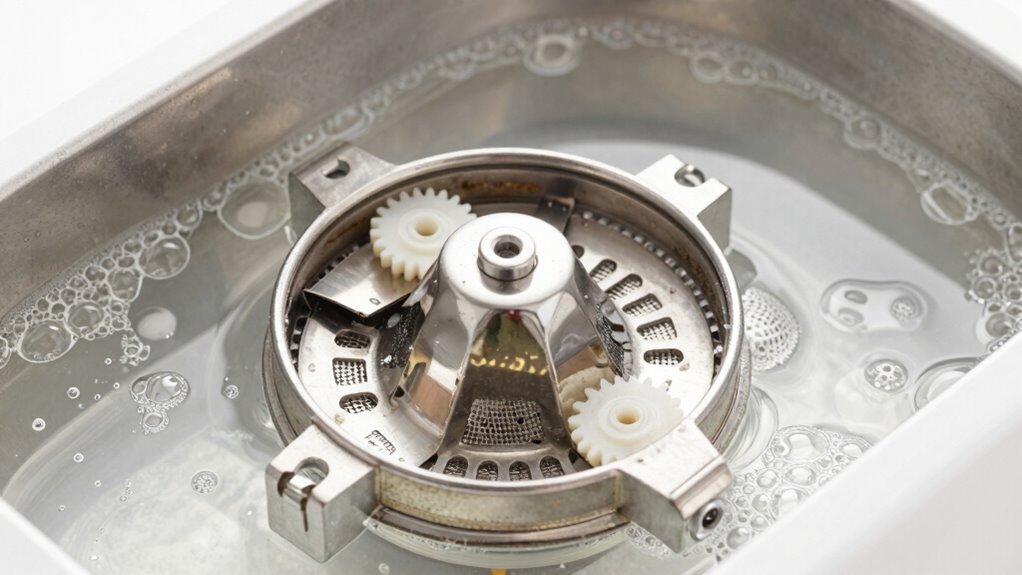

Ultrasonic cleaners effectively remove dirt, grease, and residue from juicer parts with intricate designs and hard-to-reach areas. They work by generating microscopic cavitation bubbles that dislodge debris without damaging delicate components. However, they may miss stubborn baked-on residue or heavy mineral deposits, and fragile parts could be at risk if not properly handled. To get a complete cleaning overview and tips, explore what else ultrasonic cleaners can do for your juicer.
Key Takeaways
- Ultrasonic cleaners effectively remove dirt, pulp residues, and grease from juicer parts with complex geometries and small crevices.
- They may miss stubborn dried residues or baked-on deposits that require manual scrubbing.
- Delicate parts like seals and plastic components should be cleaned with gentle frequencies to prevent damage.
- Proper cleaning solutions enhance removal of organic residues, but some mineral deposits may need additional treatment.
- Ultrasonic cleaners may not thoroughly clean internal channels or areas with heavy buildup without supplementary cleaning.
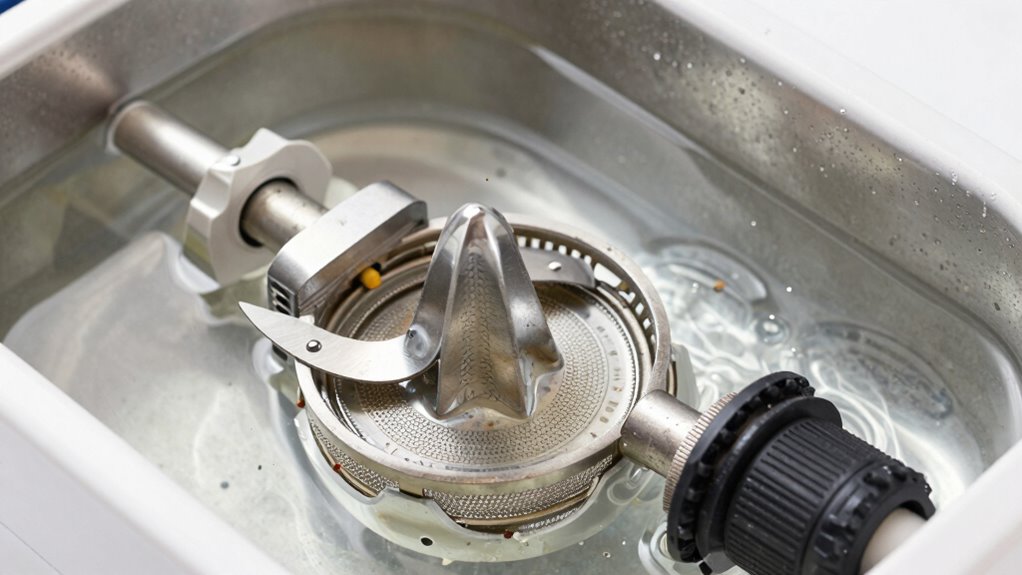
Have you ever wondered how tiny crevices and intricate details on jewelry, electronics, or medical instruments get thoroughly cleaned? Ultrasonic cleaners use high-frequency sound waves to reach into those hard-to-access spots, making them ideal for delicate and complex items. The key to their effectiveness lies in ultrasonic frequency, which typically ranges between 20 kHz and 400 kHz. Lower frequencies, around 20-40 kHz, create more vigorous cavitation bubbles, which are excellent for removing stubborn dirt, grime, or grease. Higher frequencies, however, produce gentler cleaning, suitable for fragile objects like jewelry or delicate electronic components. Selecting the right ultrasonic frequency based on the item guarantees thorough cleaning without damage.
Ultrasonic cleaning uses sound waves between 20-400 kHz for precise, gentle cleaning of delicate and complex items.
Another vital factor is the type of cleaning solution you choose. Ultrasonic cleaning solution types vary depending on what you’re cleaning. For jewelry, a mild, non-abrasive solution works best to avoid scratching precious metals or gemstones. When cleaning electronics, you’ll want a solution that’s conductive or non-corrosive to prevent damage to sensitive components. Medical instruments require specialized disinfectant solutions that can eliminate bacteria and viruses without harming the instrument’s material. It’s essential to use the appropriate cleaning solution for each application to maximize effectiveness and prevent potential harm. Additionally, understanding the ultrasonic frequency used can help optimize cleaning results for different materials and contaminants.
Ultrasonic cleaners are superb for removing dirt from surfaces with complex geometries, such as the intricate crevices of a jewelry setting or the tiny channels inside medical tools. The sound waves create millions of microscopic bubbles in the cleaning solution, which collapse with enough force to dislodge dirt, grease, and debris from even the tiniest spaces. This process ensures a deep clean that manual scrubbing simply can’t match. However, ultrasonic cleaning isn’t a catch-all solution. It struggles with stubborn, baked-on residues or items that are porous or delicate beyond the capacity of the chosen frequency and solution.
While ultrasonic cleaning is highly effective for many items, it’s not perfect for everything. For instance, items with loose or fragile parts might be dislodged or damaged by the cavitation process. Additionally, certain types of dirt or contaminants—like heavy rust or corrosion—may require additional cleaning methods. It’s also worth noting that not all cleaning solutions are compatible with every material; some chemicals can corrode metals or degrade plastics. Always check the manufacturer’s guidelines for your particular ultrasonic cleaner and the items you’re cleaning to avoid unintended damage.
Frequently Asked Questions
Can Ultrasonic Cleaners Damage Delicate Juicer Parts?
Yes, ultrasonic cleaners can damage delicate juicer parts if you’re not careful. Vapor penetration may cause tiny cracks or corrosion, and ultrasonic fatigue can weaken fragile materials over time. You should avoid using high frequencies or long cleaning cycles on delicate components, and always check manufacturer instructions. By doing so, you prevent potential damage, ensuring your juicer parts stay intact and perform effectively without risking vapor penetration or ultrasonic fatigue.
How Often Should I Ultrasonic Clean My Juicer Parts?
Think of your juicer parts like a garden that needs regular tending. You should ultrasonic clean them every 1-2 weeks, depending on usage. This cleaning frequency fits into your maintenance schedules, preventing buildup and ensuring peak performance. If you juice daily, more frequent cleaning keeps everything fresh. Adjust accordingly if you notice residue or reduced efficiency. Regular ultrasonic cleaning keeps your juicer in top shape, like a well-tended garden.
Are Ultrasonic Cleaners Safe for All Juicer Materials?
Ultrasonic cleaners are generally safe for most juicer materials, but you should check material compatibility first. They’re typically safe for stainless steel, glass, and plastic parts, offering ultrasonic safety without damaging these surfaces. However, avoid using them on delicate or porous materials like wooden or rubber components, as ultrasonic vibrations could cause damage. Always verify manufacturer recommendations to guarantee ultrasonic safety for your specific juicer parts.
Do Ultrasonic Cleaners Remove All Types of Residues?
Ultrasonic cleaners can remove most residues, but they’re not magic wands that erase every trace. They excel at residue breakdown, especially grease and grime, yet have cleaning limitations. Tough, dried-on residues or sticky substances might cling stubbornly, requiring manual scrubbing. So, while they’re impressive for general cleaning, don’t expect them to handle every stubborn mess—some residues need extra attention for a spotless result.
Can Ultrasonic Cleaning Replace Manual Scrubbing Entirely?
No, ultrasonic cleaning can’t replace manual scrubbing entirely. While it effectively removes chemical residues and hard mineral deposits, it might miss stubborn grime or residue trapped in crevices. You should still scrub areas with heavy buildup or intricate parts to guarantee a thorough clean. Ultrasonic cleaners are great for maintenance but work best when combined with manual cleaning for extensive results.
Conclusion
So, now you know ultrasonic cleaners can banish stubborn grime from your juicer parts—almost like magic. But don’t get too excited; they miss those tiny crevices deep inside, hiding the real mess. Think of it as a spa day for your juicer, with a few spots left unkissed. Next time, give those stubborn bits a little extra love. After all, even fancy gadgets have their limits—just like us!