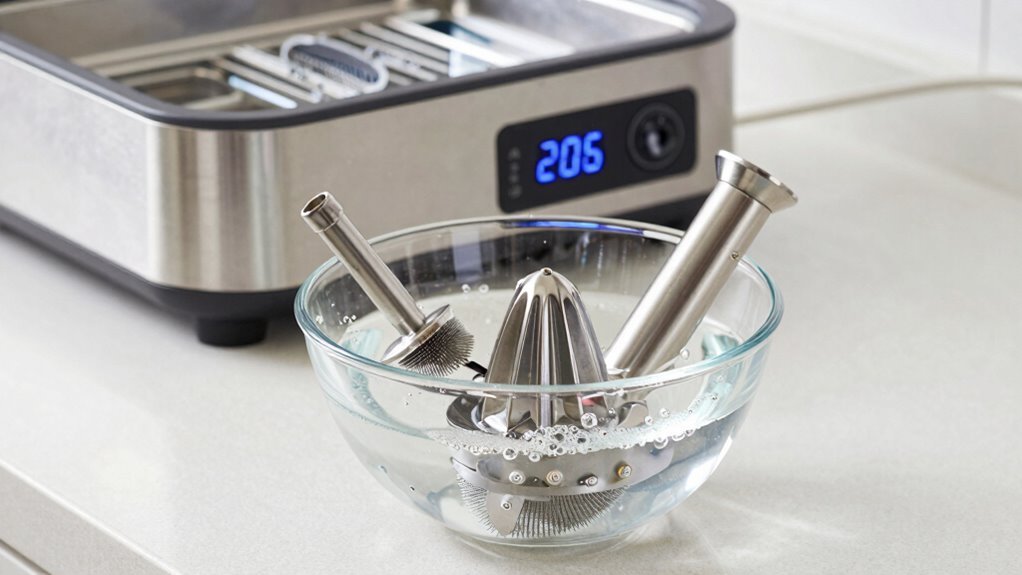

Using an ultrasonic cleaner for juicer parts can be a smart upgrade if you want thorough cleansing, extend your appliance’s life, and save time. It’s especially helpful for intricate, hard-to-reach spots, reducing bacteria and residue more effectively than hand washing. Plus, it’s eco-friendly and reduces chemical use. However, if your parts are simple to clean or you only juice occasionally, it might be overkill. Curious how it all works? Keep exploring for more insights.

Get kitchen staples and gadgets delivered free with Prime
- Fast, free delivery on millions of items
- Prime Video, Amazon Music and more included
- Member-only deals all year
Key Takeaways
- Ultrasonic cleaners provide thorough cleaning of complex juicer parts, ensuring better hygiene than manual washing.
- They offer long-term value by extending juicer component lifespan and reducing the need for replacements.
- Ideal for frequent users or high-end juicers, making cleaning more efficient and less labor-intensive.
- For occasional or simple cleaning, traditional methods may suffice, making ultrasonic cleaners less necessary.
- They promote eco-friendly practices by reducing water, chemicals, and cleaning time, aligning with sustainable living.
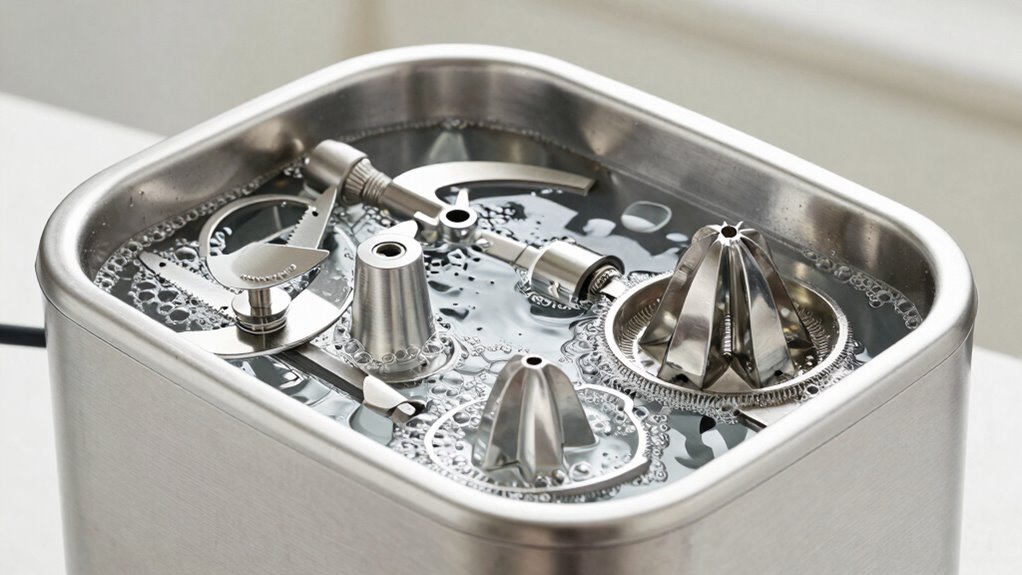
Have you ever struggled to thoroughly clean the tiny, hard-to-reach parts of your juicer? Those crevices, screens, and seals can be a hassle to scrub by hand, and stubborn residue often lingers. That’s where ultrasonic cleaners come into play, promising a deeper, more efficient clean. These devices use high-frequency sound waves to create tiny bubbles in water, which implode and gently dislodge dirt, grease, and pulp from even the most inaccessible spots. When considering whether to invest in an ultrasonic cleaner for your juicer parts, it’s natural to weigh the benefits in cleaning efficiency against the cost.
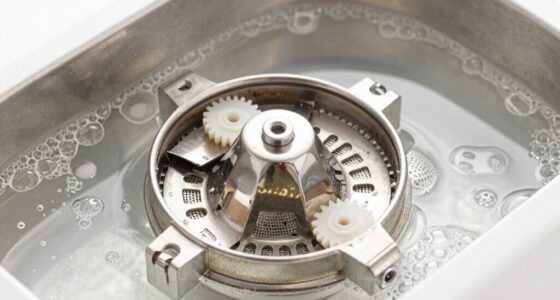
Ultrasonic cleaning technology excels at reaching areas that traditional cleaning methods can’t. The sound waves penetrate into small crevices, ensuring a more thorough clean that minimizes bacteria and residue buildup. If you’ve noticed lingering pulp or sticky deposits after hand washing, an ultrasonic cleaner could substantially improve your results. Plus, it reduces the need for aggressive scrubbing, which can sometimes damage delicate parts or wear down seals over time. Additionally, ultrasonic cleaning is a safe and eco-friendly method that uses less water and harsh chemicals compared to conventional cleaning. This environmentally conscious approach aligns well with biodiversity and sustainable living practices, helping reduce chemical waste and water consumption. Incorporating ultrasonic cleaning into your routine can also extend the lifespan of your appliance by maintaining its components in better condition. Moreover, ultrasonic technology is known for its ability to clean complex and small parts thoroughly, making it an effective choice for maintaining hygiene.
Now, let’s talk about the cost comparison. Ultrasonic cleaners vary widely in price—from affordable handheld units to more expensive, professional-grade machines. While the initial investment might seem steep compared to just using dish soap and a brush, consider the long-term savings. You’ll likely spend less time and effort cleaning, and the enhanced cleaning efficiency means fewer repeat washes or replacements of damaged parts. Over time, this can offset the upfront expense. Additionally, ultrasonic cleaners are reusable and versatile, capable of cleaning other small kitchen gadgets, jewelry, or dental tools, enhancing their value.
However, some might argue that the cost isn’t justified if your juicer parts are simple to clean or if you only juice occasionally. For infrequent use, a good brush and soap might suffice, making an ultrasonic cleaner more of a luxury than a necessity. But if you juice daily or own a high-end model with intricate designs, the investment could pay off by saving you time and ensuring your appliance stays hygienic and in prime condition. Considering the metaphysical concept of cleansing can also be a reminder that maintaining cleanliness aligns with a mindful, health-conscious lifestyle.
ultrasonic cleaner for juicer parts
As an affiliate, we earn on qualifying purchases.
As an affiliate, we earn on qualifying purchases.
Frequently Asked Questions
Are Ultrasonic Cleaners Safe for All Types of Juicer Parts?
Ultrasonic cleaners are generally safe for most juicer parts, but you need to be cautious. They use ultrasonic cavitation to loosen dirt and chemical residues, which is effective. However, avoid using them on fragile or rubber components, as ultrasonic waves could damage or degrade these materials. Always check your juicer parts’ manufacturer guidelines before cleaning with an ultrasonic cleaner to prevent any unintended damage.
How Long Should I Run an Ultrasonic Cleaner for Juicer Parts?
You should run an ultrasonic cleaner for juicer parts for about 3 to 5 minutes, depending on how dirty they are. Focus on your cleaning frequency; more frequent cleaning means shorter ultrasonic duration each time. For stubborn residue, extend the cleaning time slightly, but avoid overdoing it to prevent damage. Always follow the manufacturer’s instructions for specific parts and cleaner settings to guarantee safe, effective cleaning.
Can Ultrasonic Cleaning Remove All Stubborn Stains From Juicer Components?
Ultrasonic cleaning can effectively remove most stubborn stains from juicer components, including chemical residues and dirt. However, it might not fully clean electrical components or areas with deep-seated residues. You should be cautious, as ultrasonic cleaning may loosen or damage delicate electrical parts. For best results, use the cleaner for the recommended time, and consider manual cleaning for stubborn stains or sensitive electrical areas.
Is There a Risk of Damaging Delicate Juicer Parts With Ultrasonic Cleaning?
Sure, ultrasonic cleaning’s great—until your fragile juicer parts meet the harsh reality of chemical damage from overzealous cleaning. Yes, there’s a risk of damaging delicate components due to ultrasonic limitations, especially if you ignore manufacturer guidelines. You might think you’re saving time, but pushing the limits could crack or warp your parts, defeating the purpose. So, proceed with care, and remember, sometimes gentle hand washing beats high-tech hazards.
How Often Should I Use an Ultrasonic Cleaner for My Juicer?
You should use an ultrasonic cleaner for your juicer parts every few weeks or when you notice buildup that regular cleaning can’t remove. Follow proper cleaning frequency to maintain your juicer’s performance. Incorporate maintenance tips like avoiding harsh chemicals and inspecting parts for damage. Regular ultrasonic cleaning guarantees thorough sanitation, prolongs the lifespan of your juicer, and keeps your juice tasting fresh and pure.
Conclusion
So, are ultrasonic cleaners just a clever upgrade or an unnecessary overkill for your juicer? The truth might surprise you, as these devices could revolutionize how you clean, saving you time and effort. But, is it truly worth the investment? The answer depends on your cleaning habits and expectations. One thing’s for sure—once you see the results, you might never look at your juicer the same way again. Ready to find out?
Fall Picks
fall essentials
As an affiliate, we earn on qualifying purchases.