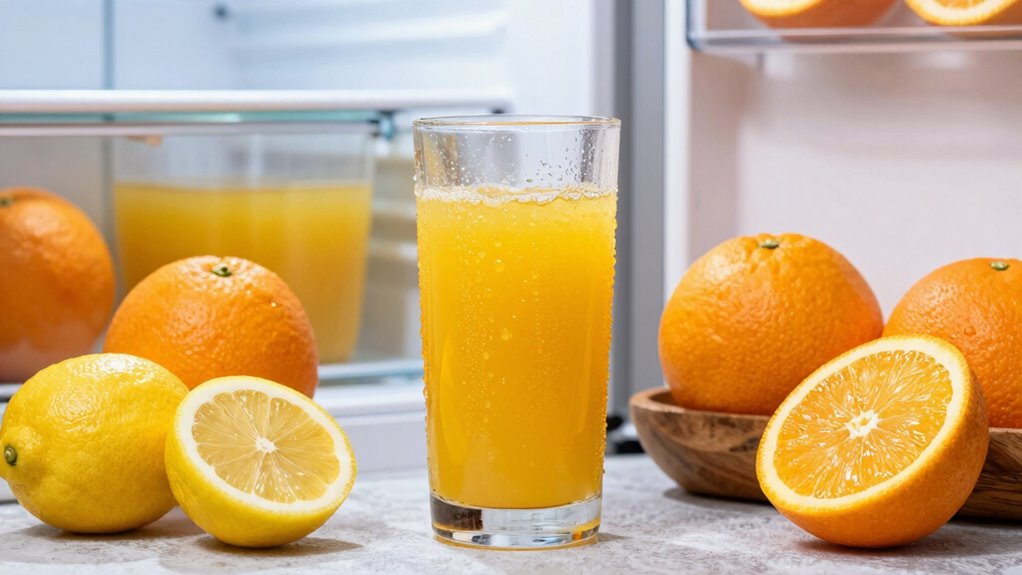
To protect your citrus juice from vitamin C loss, store it in airtight, glass containers to limit oxygen exposure. Keep the juice refrigerated in a dark, opaque container to block light and maintain a stable temperature. Avoid leaving it at room temperature or exposing it to heat and sunlight, as these factors speed up oxidation. If you want to preserve maximum nutrients, you’ll want to follow these tips carefully—more details are just ahead.
Key Takeaways
- Store citrus juice in airtight, opaque containers to prevent oxygen and UV light exposure.
- Keep juice refrigerated at a stable, cold temperature to slow oxidation.
- Minimize the time juice spends at room temperature before consumption.
- Add fresh juice after cooking or heating to preserve maximum vitamin C.
- Limit exposure to air, light, and heat during storage and handling to reduce nutrient loss.

Have you ever wondered how much vitamin C you lose during storage or cooking? It’s a common concern, especially since vitamin C is so essential for your immune system and overall health. The key to preserving this nutrient lies largely in understanding oxidation factors and adopting proper storage techniques. When citrus juice sits exposed to air, light, or heat, oxidation kicks in, breaking down vitamin C molecules and reducing their potency. This process accelerates when you leave juice out on the counter or store it improperly, so knowing how to minimize oxidation is crucial.
To protect your citrus juice from unnecessary vitamin C loss, you need to pay close attention to how you store it. First, always opt for airtight containers. Oxygen is a major oxidation factor, so limiting its contact with your juice helps preserve more vitamin C. Glass bottles with tight-fitting lids are ideal, as they don’t react with the juice and prevent air from seeping in. Keep your citrus juice refrigerated at a consistent temperature; cold storage slows down oxidation and enzymatic activity that can degrade vitamin C. Avoid storing juice in the door of the fridge, where temperature fluctuations are frequent, and instead, place it towards the back, where the temperature remains more stable.
Use airtight, glass containers and store in the back of the fridge to maximize vitamin C retention.
Light exposure also plays a significant role in vitamin C degradation. Ultraviolet rays can accelerate oxidation, so it’s best to keep your juice in a dark or opaque container. If you’re using a clear bottle, transfer the juice into an opaque container or store it in a dark place. Additionally, avoid leaving juice out at room temperature for extended periods, especially if it’s not in an airtight container. The longer juice sits exposed to air and light, the more vitamin C it loses. Proper storage methods can also be informed by temperature control, which impacts oxidation rates and nutrient preservation.
Cooking or heating citrus juice further impacts vitamin C content because high temperatures speed up oxidation factors. If you plan to use the juice in recipes, do so as close to serving time as possible. Alternatively, add fresh juice after cooking rather than during, to preserve more of the nutrient. The bottom line is that minimizing exposure to air, light, and heat, along with choosing proper storage techniques, directly affects how much vitamin C you retain. By taking these simple steps, you’ll maximize the nutritional value of your citrus juice, ensuring you get the full health benefits each time you enjoy it.
Frequently Asked Questions
Does Adding Sugar Affect Vitamin C Preservation in Citrus Juice?
Adding sugar doesn’t substantially affect vitamin C preservation in citrus juice if you use it in moderation. Sugar interaction with vitamin C is minimal, especially when the juice is stored properly. To maximize preservation, focus on refrigeration and limiting exposure to light and air. Sugar can sometimes help slow oxidation, but it’s not a primary preservation technique. Keep your juice fresh by following proven storage methods rather than relying solely on sugar addition.
Can Freezing Citrus Juice Prevent Vitamin C Loss?
Yes, freezing citrus juice can prevent vitamin C degradation if you use proper freezing techniques. When you freeze juice quickly and keep it at a consistent, cold temperature, you slow down the chemical reactions that cause vitamin C loss. Make sure to store it in airtight containers, leaving some space for expansion, and avoid repeated thawing and refreezing. This helps preserve more of the vitamin C content over time.
How Does Exposure to Light Impact Vitamin C Stability?
Light exposure can destroy vitamin C faster than a lightning strike! When your citrus juice faces light, photooxidation effects kick in, causing rapid vitamin C degradation. Light degradation isn’t just a minor issue; it considerably reduces nutrient levels, making your juice less nutritious. To keep your vitamin C intact, store your juice in a dark place or opaque container, shielding it from harmful light and preserving its health benefits.
Are There Specific Storage Containers That Better Preserve Vitamin C?
You should store your citrus juice in airtight containers or opaque bottles because these options help preserve vitamin C. Airtight containers prevent oxygen from degrading the vitamin, while opaque bottles block light that speeds up vitamin C loss. By choosing these containers, you actively protect your juice’s nutrient content, keeping it fresher and more nutritious for longer periods. Proper storage can make a noticeable difference in maintaining vitamin C levels.
Does the Age of Citrus Fruit Before Juicing Influence Vitamin C Content?
Did you know that citrus fruits can lose up to 30% of their vitamin C within just a week of harvest? The fruit’s ripeness and juicing timing considerably impact vitamin C content. If you juice them too early or too late, you miss out on maximum nutrients. For the best vitamin C boost, choose ripe fruit and juice it promptly, ensuring you get all the health benefits packed inside.
Conclusion
To keep your citrus juice rich in vitamin C, store it properly—preferably in a cool, airtight container away from sunlight. Did you know that exposure to light can reduce vitamin C levels by up to 30% within just a few hours? By following these simple habits, you can preserve more nutrients and enjoy the health benefits longer. So, make smart storage choices and maximize your citrus juice’s nutritional value every time!