
During juice standardization, you analyze raw materials for variations in sugar, acidity, pH, and color, then make adjustments by adding sweeteners, acids, or water to create a consistent flavor profile. You also monitor microbial stability, adjust pasteurization, and add preservatives to guarantee safety and shelf life. Quality control is ongoing to detect deviations early, helping you deliver a product that meets consumer expectations. Keep exploring to understand how these steps guarantee top-quality juice every time.

Get kitchen staples and gadgets delivered free with Prime
- Fast, free delivery on millions of items
- Prime Video, Amazon Music and more included
- Member-only deals all year
Key Takeaways
- Raw materials are analyzed for key attributes like sugar, acidity, and color to ensure quality.
- Adjustments are made by adding sweeteners, acids, or water to achieve desired flavor balance.
- Microbial stability is monitored, and preservation methods like pasteurization or preservatives are applied.
- Quality control procedures detect deviations, ensuring consistency across batches.
- Final product is aligned with consumer expectations for taste, appearance, and reliability.
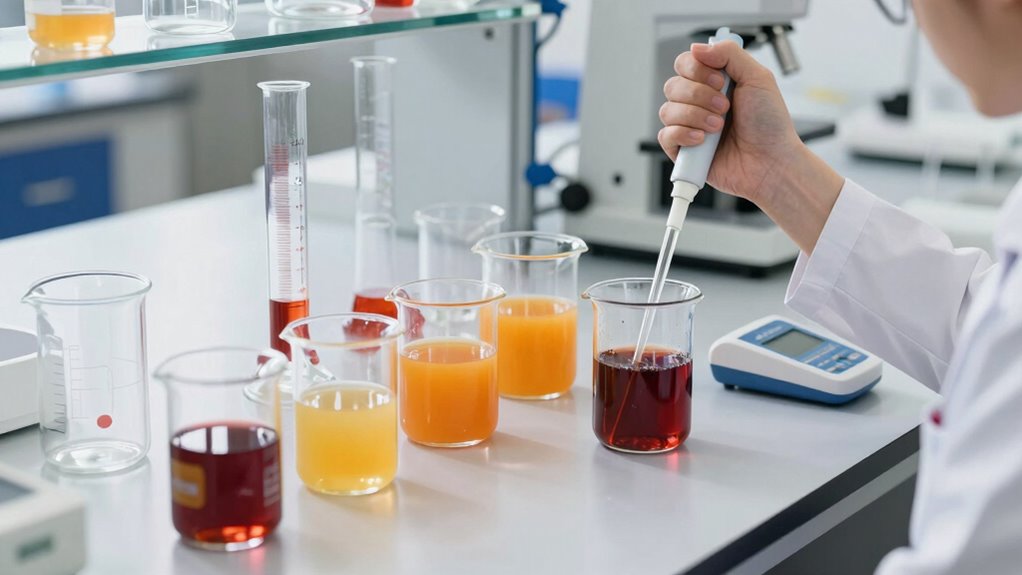
Juice standardization is essential for guaranteeing product consistency, quality, and consumer trust. When you’re involved in the production process, understanding what happens during juice standardization helps you appreciate how each batch maintains its desired attributes. At the core, standardization aims to deliver a uniform juice with consistent juice quality and flavor profile, regardless of variations in raw materials. This process involves carefully adjusting the juice’s parameters so that every bottle or container offers the same taste, aroma, and appearance that consumers expect.
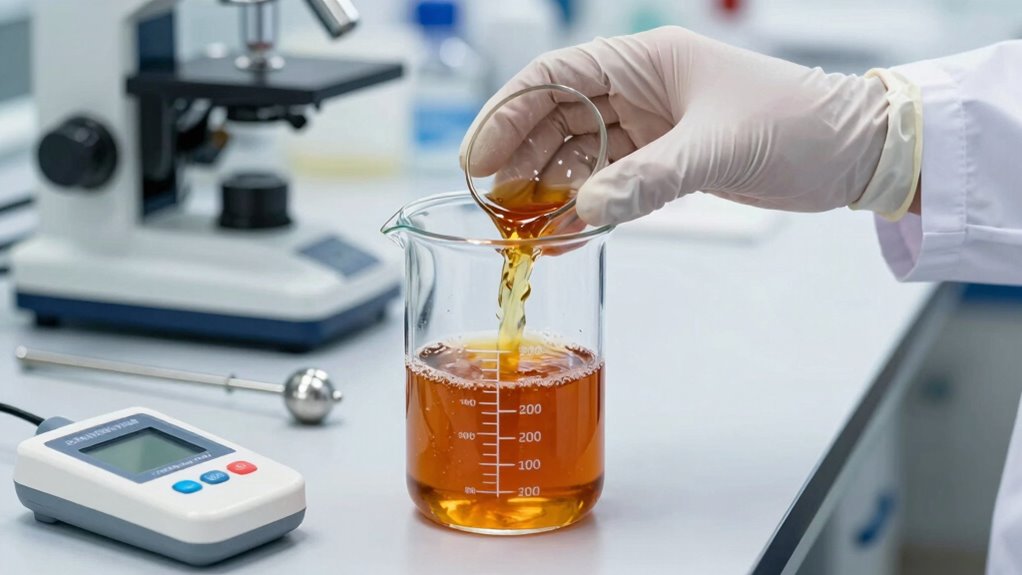
The first step in juice standardization often involves analyzing the raw juice to identify its natural variations. Fruits and vegetables differ depending on harvest time, weather conditions, and growing methods, which can all influence the juice’s initial characteristics. You then measure key attributes such as sugar content, acidity, pH, and color. These measurements serve as benchmarks to determine what adjustments are necessary to align the juice with the target quality standards. By doing this, you guarantee that the juice quality remains consistent from batch to batch.
After analyzing the raw juice, you proceed to the adjustment phase. Here, you add ingredients like sweeteners, acids, or water to fine-tune the flavor and overall profile. For example, if the juice is too tart, you might add a calibrated amount of sugar or a sweetener to balance the acidity, thereby maintaining flavor consistency. Conversely, if the juice lacks sweetness or has an off-bavor, you correct it to meet your predefined standards. This precise balancing act ensures that each batch delivers the same sensory experience, fostering consumer trust and brand loyalty. Additionally, understanding the importance of raw material variability helps you better anticipate and compensate for natural differences in the ingredients you use.
Throughout this process, you also monitor for microbial stability and proper preservation. This may involve adjusting pasteurization parameters or adding preservatives to maintain juice quality over its shelf life. This step is crucial because microbial stability directly impacts the safety and longevity of the product. Incorporating quality control procedures is vital to detect any deviations early and ensure consistent standards are upheld. It is also important to recognize that standardization techniques require ongoing refinement to adapt to changing raw material qualities and consumer preferences. The goal is to produce a safe, stable product that retains its flavor and appearance during storage and transportation. The entire standardization process is iterative and requires meticulous attention to detail, as even small deviations can impact the final product.
Ultimately, juice standardization is about control and precision. You’re aligning the natural variability of raw ingredients with the consistent standards of your brand. By doing so, you guarantee that every bottle of juice not only tastes great but also reliably meets consumer expectations for quality and flavor consistency. This rigorous process builds trust, encourages repeat purchases, and solidifies your reputation for delivering high-quality juice.
As an affiliate, we earn on qualifying purchases.
Frequently Asked Questions
How Long Does Juice Standardization Process Typically Take?
The juice standardization process typically takes a few hours, depending on the batch size and method used. You’ll focus on achieving flavor consistency through adjustments, guaranteeing each bottle tastes just right. During this process, pasteurization methods are applied to kill bacteria and preserve quality. Proper timing and careful monitoring are vital, so you can assure the final product maintains its flavor, safety, and quality for consumers.
What Equipment Is Essential for Juice Standardization?
You need essential equipment like pH meters to monitor the acidity during juice standardization, ensuring proper pH adjustment. A centrifuge helps separate fruit pulp for clarity, while a refractometer measures sugar content. You also require mixers for uniform blending and sterilizers to maintain hygiene. This equipment allows you to accurately adjust the juice’s properties, ensuring consistency, quality, and safety in the final product.
Are There Any Safety Concerns During Juice Standardization?
Yes, there are safety concerns during juice standardization. You need to prevent microbial contamination by maintaining proper hygiene and sanitation throughout the process. Additionally, you should monitor pesticide residues to confirm they are within safe limits, avoiding health risks. Handling equipment carefully and following safety protocols minimizes these hazards, protecting both workers and consumers. Regular testing and quality checks are essential to identify and address potential safety issues promptly.
Can Juice Standardization Be Automated?
Think of juice standardization as tuning a musical instrument—you can automate this process to guarantee perfect flavor consistency every time. Yes, automation is possible and increasingly common, using advanced sensors and control systems. This streamlines the process, reduces human error, and maintains quality. With process automation, you can achieve uniform flavor profiles effortlessly, making your juice production more efficient and reliable, much like a well-conducted symphony.
How Is Juice Quality Maintained Post-Standardization?
After juice standardization, you maintain quality by regularly monitoring flavor consistency and pH balancing. You should taste-test samples and measure pH levels frequently to guarantee the juice remains true to its intended flavor profile and safe for consumption. Adjustments may be necessary if flavors shift or pH drifts outside desired ranges. Consistent quality checks help prevent spoilage and ensure your juice meets quality standards throughout its shelf life.
Conclusion
As you wrap up the juice standardization process, remember that precision is key—think of it as Hemingway sharpening his prose. You guarantee each batch is consistent, flavorful, and meets quality standards, much like a master distiller refining their spirit. This step transforms your raw juice into a reliable product, ready for market. So, embrace the meticulous work, for without it, your juice would be as unpredictable as a knight’s fate in a dragon’s lair.
NFL season / tailgating Picks
team gear
As an affiliate, we earn on qualifying purchases.