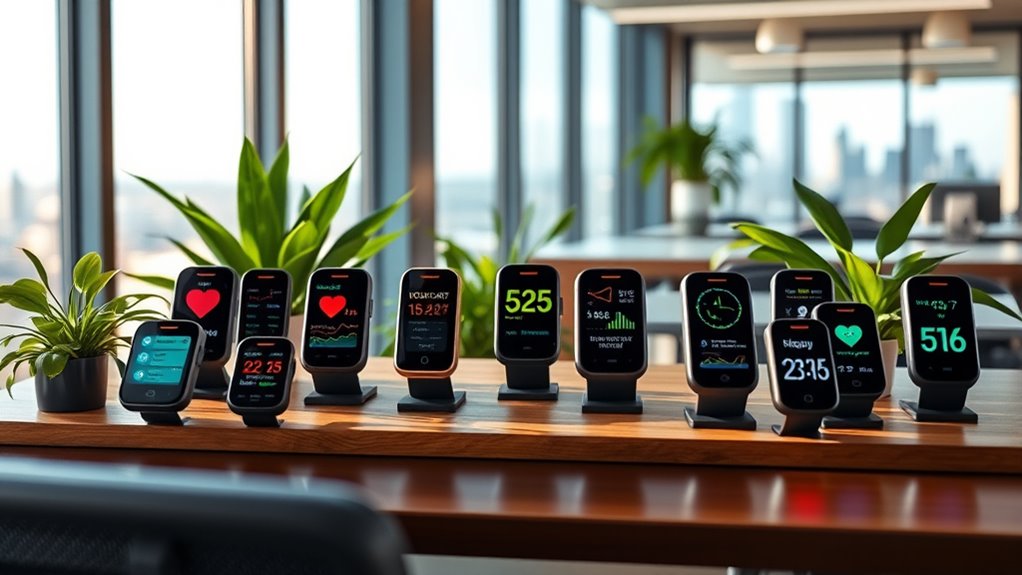

Smart health monitors range from dedicated blood pressure cuffs to wrist-worn trackers and a smart ring, so the right pick depends on which readings you need and how you will use them. I name the Withings BPM Connect my best overall choice for its connected blood pressure tracking, while the OMRON Evolv stands out for a streamlined cuff design and the Fitbit Air for screen-free activity tracking. The main tradeoff is between focused measurements that suit a specific health task and wearable convenience that gathers broader daily data. Wearable readings are not a substitute for a properly used, clinically validated blood pressure monitor or medical advice. Read on for how the 15 options differ, who each type suits, and what to check before choosing.

Get kitchen staples and gadgets delivered free with Prime
- Fast, free delivery on millions of items
- Prime Video, Amazon Music and more included
- Member-only deals all year
Key Takeaways
- Dedicated cuffs lead for blood pressure: Withings BPM Connect, OMRON Evolv, iHealth Track, iHealth Neo, and iProven are designed around cuff measurements, unlike the wrist trackers that list blood pressure among multiple metrics.
- The strongest overall pick is task-focused: Withings BPM Connect combines a dedicated cuff with Wi-Fi and Bluetooth data transfer, while OMRON Evolv favors a compact wireless setup.
- Wearables trade measurement focus for daily convenience: The smartwatch, fitness band, and BIEMHA smart ring make activity and sleep tracking part of a wearable routine, but their listed features do not make them replacements for a dedicated cuff.
- Feature lists are not interchangeable: Several fitness trackers list blood pressure, blood oxygen, heart rate, and sleep, yet product names alone do not establish measurement accuracy or medical suitability.
- Fit and data habits separate the cuff options: Wide-range cuff details, wireless connectivity, app integration, and the willingness to use an arm cuff regularly matter more than a long list of wearable metrics.
| Health Smartwatch with Heart Rate, Blood Oxygen, Sleep, and Activity Tracking |  | Best for Feature Variety | Display: 2.04-inch OLED | Connectivity: Bluetooth 5.2 | Health metrics: Heart rate, blood oxygen, body temperature, blood pressure, sleep duration, and stress | VIEW ON AMAZON | See Our Full Breakdown |
| Withings BPM Connect – Blood Pressure Cuff, FDA Cleared, WiFi & Bluetooth |  | Best for Blood Pressure Tracking | Model: WPM05 | Measurement target: Upper arm | Display: LCD with color-coded feedback | VIEW ON AMAZON | See Our Full Breakdown |
| iHealth Track Smart Upper Arm Blood Pressure Monitor with Wide-Range Cuff |  | Best Simple Upper-Arm Monitor | Measurement type: Upper-arm blood pressure | Operation: Two buttons | Display: Large multicolor backlit display | VIEW ON AMAZON | See Our Full Breakdown |
| Bestinn H32 Fitness Tracker with Heart Rate, Blood Oxygen, Blood Pressure, Sleep, and Activity Tracking |  | Best Compact Tracker | Model: H32 | Display: 1.58 inches with always-on clock | Health monitoring: Heart rate, blood pressure, blood oxygen, and sleep stages | VIEW ON AMAZON | See Our Full Breakdown |
| Fitness Tracker with Heart Rate, Blood Pressure, Blood Oxygen, Sleep Monitoring, and Waterproof Design |  | Best for Swimming and Water Use | Display: 1.47-inch high-definition full-color touchscreen | Water resistance: 50 meters; IP68 listed | Health features: Heart rate, blood oxygen, blood pressure, and sleep tracking | VIEW ON AMAZON | See Our Full Breakdown |
| Zeacool Fitness Tracker with Heart Rate, Blood Oxygen, Sleep Monitoring, and 5 ATM Water Resistance |  | Best for Water-Ready, All-Day Tracking | Display: 1.1-inch AMOLED touchscreen | Water resistance: 5 ATM | Sport modes: 25 | VIEW ON AMAZON | See Our Full Breakdown |
| Fitness Tracker with Heart Rate, Blood Pressure, Sleep Monitoring, 1.10″ AMOLED Screen, Waterproof, Smart Watch for Women and Men |  | Best for Customizable Everyday Wear | Display: 1.10-inch AMOLED HD touchscreen | Water resistance: IP68 | Battery life: Up to 7 days | VIEW ON AMAZON | See Our Full Breakdown |
| iProven Bluetooth Blood Pressure Monitor for Home Use with App Integration |  | Best for Home Blood Pressure Tracking | Device type: Bluetooth home blood pressure monitor | Operation: One-touch | Cuff size: 8 3/4–16 1/2 inches | VIEW ON AMAZON | See Our Full Breakdown |
| MorePro Fitness Tracker with Health, Sleep, and Activity Monitoring |  | Best for Sport-Mode Variety | Water resistance: IP68; stated water-resistance depth of 1.5 meters | Sport modes: 120+ | Battery life: Up to 7 days normal use; up to 15 days standby | VIEW ON AMAZON | See Our Full Breakdown |
| BIEMHA Smart Ring Health and Fitness Tracker, Rose Gold, Size 10 |  | Best Compact, Screen-Free Monitor | Color and size: Rose gold, size 10 | Water resistance: Listed depth of 80 meters | Battery life: 2–3 days; over 5 days with charging case | VIEW ON AMAZON | See Our Full Breakdown |
| Smart Watch for Women with Health Monitoring and Fitness Tracking |  | Best for Long Battery Life | Display: 1.83 inches | Battery capacity: 1000 mAh | Battery life: Up to 30 days of regular use | VIEW ON AMAZON | See Our Full Breakdown |
| iHealth Neo Wireless Upper Arm Blood Pressure Monitor |  | Best for Simple, Shareable Blood Pressure Tracking | Measurement type: Upper-arm blood pressure | Operation: One button | Measurement time: 30–60 seconds | VIEW ON AMAZON | See Our Full Breakdown |
| Zeacool Fitness Tracker with Heart Rate, Blood Oxygen, and Sleep Monitoring |  | Best for Sports-Mode Variety | Screen: 1.47-inch AMOLED HD touchscreen | Sports modes: 123 | Water resistance: IP68 | VIEW ON AMAZON | See Our Full Breakdown |
| Google Fitbit Air Screenless Activity Tracker, Obsidian |  | Best Screenless Wearable | Operating system: Fitbit OS | Band size: One size, 130–210 mm | Band material: Google Performance Loop Band | VIEW ON AMAZON | See Our Full Breakdown |
| OMRON Evolv Wireless Upper Arm Blood Pressure Monitor |  | Best for Blood Pressure Trends and Irregular-Heartbeat Detection | Monitor type: Upper-arm blood pressure monitor | Connectivity: Bluetooth | Irregular-heartbeat detection: Yes | VIEW ON AMAZON | See Our Full Breakdown |
| smart health monitor | Display | Water resistance | Compatibility | Connectivity |
|---|---|---|---|---|
| Health Smartwatch with Heart R | 2.04-inch OLED | IP68; listed depth of 1.5 meters | Android 4.4+ and iOS 8.2+ | Bluetooth 5.2 |
| Withings BPM Connect | LCD with color-coded feedback | — | — | Wi-Fi and Bluetooth |
| iHealth Track Smart Upper Arm | Large multicolor backlit display | — | — | Bluetooth 4.0 or later |
| Bestinn H32 Fitness Tracker wi | 1.58 inches with always-on clock | — | Android 4.4+; iOS 8.4+ | — |
| Fitness Tracker with Heart Rat | 1.47-inch high-definition full-color touchscreen | 50 meters; IP68 listed | Android 4.4+ and iOS 9.0+ | Bluetooth |
| Zeacool Fitness Tracker with H | 1.1-inch AMOLED touchscreen | 5 ATM | iPhone and Android smartphones | — |
| Fitness Tracker with Heart Rat | 1.10-inch AMOLED HD touchscreen | IP68 | Android 5.0+ and iOS 9.0+ | — |
| iProven Bluetooth Blood Pressu | Large backlit screen | — | — | Bluetooth |
| MorePro Fitness Tracker with H | — | IP68; stated water-resistance depth of 1.5 meters | Android 7.0+ and iOS 13.0+ | Bluetooth |
| BIEMHA Smart Ring Health and F | No display | Listed depth of 80 meters | — | — |
| Smart Watch for Women with Hea | 1.83 inches | IP68; 1.5 meters listed | iOS 10.0+ and Android 6.0+ | — |
| iHealth Neo Wireless Upper Arm | — | — | — | Bluetooth 4.0 |
| Zeacool Fitness Tracker with H | — | IP68 | iPhone and Android | — |
| Google Fitbit Air Screenless A | — | Up to 50 meters | Android 11.0 or later; iOS 16.4 or later | — |
| OMRON Evolv Wireless Upper Arm | — | — | — | Bluetooth |
More Details on Our Top Picks
Health Smartwatch with Heart Rate, Blood Oxygen, Sleep, and Activity Tracking
This is the most feature-packed wrist option in this group, combining six listed health metrics with more than 150 sports modes, Bluetooth calls, notifications, and voice controls. That breadth suits someone who wants one screen for everyday activity and connected-watch tasks, rather than a dedicated blood pressure device like the Withings BPM Connect. The tradeoff is that its measurements should not be treated as a substitute for a validated clinical monitor: the listing gives no accuracy or clearance details for its health readings. GPS also depends on a paired phone, so it is less self-sufficient outdoors than a watch with built-in GPS. I would choose it for its range of functions, but the missing battery-life information makes charging expectations hard to judge.
Pros:- Tracks heart rate, blood oxygen, temperature, blood pressure, sleep, stress, and activity
- Offers more than 150 sports modes
- Supports Bluetooth calls, notifications, and voice controls
- Customizable watch faces and practical reminders add everyday utility
Cons:- GPS requires a connected smartphone
- No battery-life information is provided
- No accuracy or medical-clearance details are listed for its health measurements
Best for: People who want a broad set of wellness and activity features, call handling, and notifications on one smartwatch.
Not ideal for: People monitoring blood pressure for clinical decisions or runners who want GPS without carrying a phone.
- Display:2.04-inch OLED
- Connectivity:Bluetooth 5.2
- Health metrics:Heart rate, blood oxygen, body temperature, blood pressure, sleep duration, and stress
- Sports modes:150+
- Water resistance:IP68; listed depth of 1.5 meters
- GPS:Via connected smartphone
- Compatibility:Android 4.4+ and iOS 8.2+
- Band width:22 millimeters
Our verdict“Choose this smartwatch for broad, phone-connected wellness features, but pick the Withings BPM Connect when dependable blood pressure tracking is the priority.”
Withings BPM Connect – Blood Pressure Cuff, FDA Cleared, WiFi & Bluetooth
Unlike the wrist trackers here, the Withings BPM Connect is built around upper-arm blood pressure readings, with FDA clearance, heart-rate measurement, and color-coded feedback on its LCD. Its Wi-Fi and Bluetooth syncing send readings to the Health Mate app, making it a stronger fit for people who need a history they can share with a clinician. It is less of an all-day health monitor than the Health Smartwatch: it does not list sleep, activity, or sports tracking. The cuff also depends on a compatible phone or tablet for full functionality, while the iHealth Track offers on-device storage for up to 99 readings. A rechargeable battery lasting up to six months helps keep routine tracking low-maintenance.
Pros:- FDA-cleared for blood pressure measurement
- Color-coded display makes results easier to interpret at a glance
- Wi-Fi and Bluetooth sync readings to the Health Mate app
- Rechargeable battery lasts up to six months
Cons:- Full functionality requires a compatible smartphone or tablet
- Tracks blood pressure and heart rate rather than sleep or daily activity
- Requires a separate measurement session rather than continuous wrist tracking
Best for: People who need a dedicated upper-arm blood pressure monitor with app-based history and clinician sharing.
Not ideal for: Buyers seeking continuous sleep, exercise, or broad wellness tracking from a wearable device.
- Model:WPM05
- Measurement target:Upper arm
- Display:LCD with color-coded feedback
- Connectivity:Wi-Fi and Bluetooth
- Battery:Rechargeable; up to six months
- Band size:22–42 cm
- Weight:12.8 ounces
- Warranty:Two-year manufacturer warranty
Our verdict“Choose the Withings BPM Connect for app-connected blood pressure tracking and clinician sharing, not for all-day activity monitoring.”
iHealth Track Smart Upper Arm Blood Pressure Monitor with Wide-Range Cuff
The iHealth Track keeps blood pressure measurement straightforward: two-button operation, a large color-coded backlit display, and an upper-arm cuff that fits a broad range of arm sizes. It also stores up to 99 readings on the unit, which gives it a practical advantage over the Withings BPM Connect when a buyer wants some history available without opening an app. For longer-term tracking, it can sync readings to the iHealth app. Its heart-rhythm disturbance detection adds another useful prompt, but it should not be read as a diagnosis. Compared with the wrist-based Bestinn H32, this is a focused measurement tool, not a daily activity tracker. Bluetooth app use requires a compatible phone, and careful setup matters for accurate readings.
Pros:- Large multicolor backlit display is easy to read
- Stores up to 99 readings on the device
- Wide-range cuff fits upper arms measuring 8.7–16.5 inches
- Alerts users to detected heart rhythm disturbances
Cons:- App tracking requires a compatible smartphone and Bluetooth
- Accurate readings depend on following the instructions carefully
- Uses four AAA batteries rather than a rechargeable battery
Best for: People who want a straightforward upper-arm blood pressure monitor with a readable screen, a wide-fit cuff, and basic on-device history.
Not ideal for: Buyers who want sleep and exercise tracking, or who prefer not to follow measurement instructions closely.
- Measurement type:Upper-arm blood pressure
- Operation:Two buttons
- Display:Large multicolor backlit display
- On-device storage:Up to 99 readings
- Cuff fit:8.7–16.5 inches (22–42 cm) upper-arm circumference
- Power:Four AAA batteries
- Connectivity:Bluetooth 4.0 or later
- Standards:Meets ESH 2010 performance standards
Our verdict“Pick the iHealth Track for accessible upper-arm readings and basic stored history; choose the Withings BPM Connect for Wi-Fi syncing and longer battery life.”
Bestinn H32 Fitness Tracker with Heart Rate, Blood Oxygen, Blood Pressure, Sleep, and Activity Tracking
The Bestinn H32 takes a more compact approach than the 2.04-inch Health Smartwatch, with a 1.58-inch display for health summaries, sleep stages, and daily activity. It lists more than 120 exercise modes, phone-connected GPS, notifications, alarms, and music controls, making it a better fit for buyers who want familiar tracker functions without a larger watch face. Its replaceable, washable strap is a practical advantage for regular wear. The tradeoff is that GPS still relies on a phone, and the listed blood pressure and blood oxygen features are not described as clinically validated. It also lacks the Withings BPM Connect’s dedicated blood pressure measurement focus. More than 250 watch faces add choice, though they do not replace detailed health guidance.
Pros:- Compact 1.58-inch display with an always-on clock
- Tracks heart rate, blood pressure, blood oxygen, sleep stages, and daily activity
- Offers more than 120 exercise modes and over 250 watch faces
- Includes a replaceable, washable strap
Cons:- GPS route tracking requires a connected phone
- Health readings are not described as clinically validated
- Compatibility requires Android 4.4+ or iOS 8.4+
Best for: Buyers who prefer a smaller-screen fitness tracker for daily activity, sleep tracking, and phone notifications.
Not ideal for: People who need standalone GPS or a dedicated, medically focused blood pressure monitor.
- Model:H32
- Display:1.58 inches with always-on clock
- Health monitoring:Heart rate, blood pressure, blood oxygen, and sleep stages
- Exercise modes:120+
- Activity tracking:Steps, distance, and calories burned
- GPS:Route tracking via connected phone
- Compatibility:Android 4.4+; iOS 8.4+
- Warranty:Three years
Our verdict“Choose the Bestinn H32 for a compact everyday tracker with broad listed features, but use the Withings BPM Connect for focused blood pressure monitoring.”
Fitness Tracker with Heart Rate, Blood Pressure, Blood Oxygen, Sleep Monitoring, and Waterproof Design
This tracker stands out for its listed 50-meter water resistance and IP68 rating, giving water-active buyers a clearer reason to choose it over the Bestinn H32, whose description does not specify a water rating. It covers heart rate, blood oxygen, blood pressure, sleep, and basic activity, with notifications and phone-connected GPS for everyday use. The 1.47-inch color touchscreen is smaller than the Health Smartwatch’s 2.04-inch OLED, which may suit someone who wants a less prominent display but leaves less room for on-screen information. Battery life is described only as extended, without a duration, and the 64 MB RAM listing offers little clarity about how much data or app functionality is supported. I would treat its health readings as wellness features, not clinical measurements.
Pros:- Listed 50-meter water resistance and IP68 waterproof rating
- Tracks heart rate, blood oxygen, blood pressure, sleep, and steps
- Supports smartphone GPS, notifications, and customizable watch faces
- Silicone strap and compact 1.47-inch touchscreen
Cons:- Battery life is described as extended without a specific duration
- GPS requires a connected smartphone
- The health readings are not described as clinically validated
Best for: Swimmers and active users seeking a water-resistant tracker with basic wellness monitoring and phone notifications.
Not ideal for: Buyers who need a stated battery-runtime figure, extensive storage details, or clinically validated blood pressure readings.
- Display:1.47-inch high-definition full-color touchscreen
- Water resistance:50 meters; IP68 listed
- Health features:Heart rate, blood oxygen, blood pressure, and sleep tracking
- Other tracking:Pedometer and GPS via smartphone
- Connectivity:Bluetooth
- Compatibility:Android 4.4+ and iOS 9.0+
- Memory:64 MB RAM
- Strap:Silicone, 16 mm wide
Our verdict“Choose this tracker for its stated water resistance and everyday wellness features, but select a dedicated monitor such as the Withings BPM Connect for blood pressure tracking.”
Zeacool Fitness Tracker with Heart Rate, Blood Oxygen, Sleep Monitoring, and 5 ATM Water Resistance
The Zeacool makes sense for buyers who want a broad set of wellness and activity readings in a tracker they can keep on during water-based workouts. Its 5 ATM water resistance gives it an advantage over the MorePro’s IP68 rating, while the 1.1-inch AMOLED screen keeps readings and reminders easy to view. It also covers sleep, temperature, blood pressure, and blood oxygen alongside 25 sport modes, so it offers more breadth than a monitor focused mainly on blood pressure, such as the iProven. The tradeoff is that the listing gives no accuracy details for its health measurements; I would treat them as general tracking rather than clinical readings. Its 10–14-day stated battery life is appealing, though actual use may vary with features enabled.
Pros:- 5 ATM water resistance suits swimming and other water-based activities
- Tracks sleep, heart rate, blood oxygen, temperature, and daily activity
- 25 sport modes offer more activity choices than a basic step tracker
- Advertised battery life of up to 10–14 days between charges
Cons:- No accuracy information is provided for blood pressure or other health readings
- A fitness band cannot replace a dedicated upper-arm blood pressure monitor
- The 1.1-inch display offers less viewing space than a larger smartwatch screen
Best for: People who want one water-resistant wrist tracker for everyday activity, sleep, and general wellness trends.
Not ideal for: Anyone who needs dependable clinical blood pressure measurements or documented accuracy, since the health readings are presented without accuracy details.
- Display:1.1-inch AMOLED touchscreen
- Water resistance:5 ATM
- Sport modes:25
- Battery life:Up to 10–14 days of regular use; up to 30 days standby
- Compatibility:iPhone and Android smartphones
- Tracked metrics:Heart rate, blood oxygen, blood pressure, temperature, sleep, steps, distance, and calories
- Material:Acrylonitrile Butadiene Styrene (ABS)
- Warranty:One year
Our verdict“Choose the Zeacool if water resistance and broad everyday tracking matter more than clinically documented health readings.”
Fitness Tracker with Heart Rate, Blood Pressure, Sleep Monitoring, 1.10″ AMOLED Screen, Waterproof, Smart Watch for Women and Men
This tracker is a better fit for someone who values a clear, personalized wrist display as much as activity tracking. The 1.10-inch AMOLED HD screen and customizable watch faces give it a more watch-like feel than the screenless BIEMHA ring, while its 25 sports modes cover common workouts without the MorePro’s very large mode count. Notifications, camera control, and hydration reminders add practical phone-linked functions. Its IP68 water resistance is useful for everyday exposure, but it does not match the Zeacool’s stated 5 ATM rating for water-focused use. Battery life is listed at up to seven days, and health readings may vary; I would not choose it as a substitute for the iProven when dependable home blood pressure tracking is the priority.
Pros:- AMOLED HD touchscreen with customizable watch faces
- Tracks heart rate, blood pressure, sleep, and daily activity
- Includes notifications, camera control, and hydration reminders
- Works with Android 5.0+ and iOS 9.0+
Cons:- Up to seven days of battery life is shorter than the Zeacool’s stated regular-use range
- Health readings may vary and are described as reference information
- Some functions depend on app connectivity
Best for: Android or iPhone users who want a customizable watch face, basic wellness trends, and everyday notifications in one wearable.
Not ideal for: Swimmers seeking a tracker with a stated 5 ATM rating, or people who need a dedicated, accuracy-focused blood pressure monitor.
- Display:1.10-inch AMOLED HD touchscreen
- Water resistance:IP68
- Battery life:Up to 7 days
- Charging time:2 hours
- Sports modes:25
- Compatibility:Android 5.0+ and iOS 9.0+
- Health tracking:Heart rate, blood pressure, and sleep
- Additional features:Notifications, camera control, hydration reminders, and customizable watch faces
Our verdict“Pick this model for a customizable, notification-friendly tracker, but choose the Zeacool for its higher stated water-resistance rating.”
iProven Bluetooth Blood Pressure Monitor for Home Use with App Integration
Unlike the wrist trackers in this roundup, the iProven is built around a specific job: taking blood pressure readings at home and making the results easier to follow over time. Its one-touch operation and large backlit screen are practical for users who want a straightforward reading without first navigating a smartwatch. Bluetooth and app support add trend tracking and reminders, while the adjustable cuff covers arms from 8 3/4 to 16 1/2 inches. That makes it a more direct choice for blood pressure management than the Zeacool or MorePro, whose readings are part of broader fitness tracking. The tradeoff is a narrower focus: it does not track sleep, workouts, or daily activity, and full app features require a smartphone. Pairing may also be inconsistent.
Pros:- One-touch operation keeps routine readings straightforward
- Large backlit screen supports easier reading at home
- Bluetooth app integration supports trend tracking and reminders
- Adjustable cuff fits arm circumferences from 8 3/4 to 16 1/2 inches
Cons:- Full app features require a compatible smartphone
- Bluetooth pairing may occasionally cause connection problems
- Does not provide wearable sleep, activity, or workout tracking
Best for: Adults tracking home blood pressure trends, including older users who benefit from a simple button and readable display.
Not ideal for: People seeking an all-day wearable for sleep, activity, and workout tracking, or users who want app features without a smartphone.
- Device type:Bluetooth home blood pressure monitor
- Operation:One-touch
- Cuff size:8 3/4–16 1/2 inches
- Display:Large backlit screen
- Connectivity:Bluetooth
- App compatibility:iOS, Android, and Apple Health
- FSA/HSA eligible:Yes
Our verdict“Choose the iProven over the fitness bands if your main goal is recording blood pressure readings and following them in an app.”
MorePro Fitness Tracker with Health, Sleep, and Activity Monitoring
The MorePro is the activity-led choice here: its 120+ sport modes give workout-focused users far more named activity options than the 25 modes on the Zeacool or the other AMOLED tracker. It also combines heart rate, blood oxygen, blood pressure, sleep, cycle tracking, and phone notifications, making it a versatile daily band rather than a single-purpose monitor. The main compromise is what it leaves out: there is no built-in GPS, so routes and location-based workout records depend on a connected phone or another device. Its health measurements are not intended for medical use, which makes the iProven a more appropriate pick for home blood pressure monitoring. With up to seven days of normal-use battery life, it asks for more frequent charging than the Zeacool.
Pros:- More than 120 sport modes offer broad activity selection
- Tracks heart rate, blood oxygen, blood pressure, sleep, and steps
- Includes women’s cycle tracking and call, SMS, and app notifications
- IP68 water resistance and up to seven days of normal-use battery life
Cons:- No built-in GPS for recording routes independently
- Health measurements are not intended for medical use
- Up to seven days of normal-use battery life is shorter than the Zeacool’s stated range
Best for: Active users who want many workout modes, sleep and wellness tracking, and phone notifications without needing built-in GPS.
Not ideal for: Runners and cyclists who want to record routes without carrying a phone, or anyone relying on wearable readings for medical decisions.
- Water resistance:IP68; stated water-resistance depth of 1.5 meters
- Sport modes:120+
- Battery life:Up to 7 days normal use; up to 15 days standby
- Charging time:About 2 hours
- GPS:No built-in GPS
- Tracked metrics:Blood oxygen, blood pressure, heart rate, sleep duration, and step count
- Compatibility:Android 7.0+ and iOS 13.0+
- Band:Silicone; 20 mm wide and 22 cm long
- Connectivity:Bluetooth
Our verdict“Choose the MorePro if workout variety is your priority and you are comfortable carrying a phone for route tracking.”
BIEMHA Smart Ring Health and Fitness Tracker, Rose Gold, Size 10
The BIEMHA ring suits buyers who want wellness tracking without a screen or wristband. Its compact ring form records heart rate automatically every 30 minutes and tracks sleep and activity, offering a less watch-like alternative to the Zeacool and MorePro bands. The listed 80-meter water resistance is unusually high for this group, and no app subscription is required. Those benefits come with practical limits: the ring lasts only two to three days per charge without its case, and choosing the correct size matters for a comfortable fit. Its sizing and lack of a display also make it less convenient for checking information at a glance than either AMOLED tracker. Like those wearables, its blood pressure feature should not be treated as a replacement for the dedicated iProven monitor.
Pros:- Ring format offers a compact alternative to wrist-worn trackers
- Tracks sleep, activity, and wellness metrics, with heart rate readings every 30 minutes
- Listed as water resistant to 80 meters
- No app subscription required, and the charging case can extend use beyond five days
Cons:- Battery lasts only two to three days without the charging case
- Requires careful finger measurement to select the right size
- No display for checking readings directly on the ring
Best for: People who prefer a discreet, screen-free wearable for sleep and general wellness tracking and are comfortable choosing a ring size carefully.
Not ideal for: Buyers who want a screen for quick checks, longer standalone battery life, or a dedicated device for blood pressure readings.
- Color and size:Rose gold, size 10
- Water resistance:Listed depth of 80 meters
- Battery life:2–3 days; over 5 days with charging case
- Heart rate monitoring:Automatic measurement every 30 minutes
- Tracked metrics:Heart rate, sleep duration, blood pressure, and activity
- Display:No display
- GPS:No
- Subscription:Not required
Our verdict“Choose the BIEMHA for discreet, screen-free tracking, but pick a wrist tracker if quick on-device checks matter more.”
Smart Watch for Women with Health Monitoring and Fitness Tracking
This watch suits buyers who want everyday health and activity tracking without frequent charging. Its 1000 mAh battery is rated for up to 30 days of regular use, substantially longer than the Zeacool Fitness Tracker, which is listed for 10–14 days. It also offers heart rate, blood oxygen, blood pressure, sleep, and menstrual-cycle tracking, alongside more than 100 sports modes. The 1.83-inch display, Bluetooth calls, notifications, and two interchangeable bands make it more of an all-purpose smartwatch than Fitbit’s screenless Google Fitbit Air. The tradeoff is that GPS depends on a paired phone, and listed health measurements should not be treated as medical readings. IP68 protection is for everyday water exposure, not diving or high-pressure activities.
Pros:- Battery rated for up to 30 days of regular use
- Tracks heart rate, blood oxygen, sleep, and menstrual cycle
- More than 100 sports modes
- Bluetooth calls, notifications, two included bands, and over 200 watch faces
Cons:- GPS requires a connected smartphone
- IP68 rating is not intended for diving or high-pressure water activities
- Broad health tracking does not make it a medical-grade monitor
Best for: People who want a large-screen smartwatch with broad activity tracking and fewer charging interruptions
Not ideal for: Swimmers who need dive-ready protection, or runners who want built-in GPS without carrying a phone
- Display:1.83 inches
- Battery capacity:1000 mAh
- Battery life:Up to 30 days of regular use
- Charging time:2 hours
- Water resistance:IP68; 1.5 meters listed
- Sports modes:100+
- Compatibility:iOS 10.0+ and Android 6.0+
- GPS:Via smartphone
Our verdict“Choose this watch if long stated battery life and a large mix of smartwatch and wellness features matter more than standalone GPS or medical-grade readings.”
iHealth Neo Wireless Upper Arm Blood Pressure Monitor
For buyers focused on blood pressure rather than all-day wearable data, the iHealth Neo is the more direct health-monitoring choice in this group. Its upper-arm cuff uses one-button operation and takes about 30–60 seconds per reading, while Bluetooth sends results to the MyVitals app for storage, export, and sharing. That makes it easier to build a record for a clinician than relying on the smartwatch estimates offered by the Smart Watch for Women. Unlike the OMRON Evolv, the Neo description does not list irregular-heartbeat detection, but it does offer CSV, XLS, and PDF exports and a rechargeable battery. Its appeal is focused simplicity; buyers seeking steps, sleep tracking, or workout modes will need a separate device.
Pros:- Clinically validated upper-arm blood pressure measurement
- One-button operation with gentle inflation
- MyVitals app can store, export, and share readings
- Rechargeable battery supports up to 130 measurements per charge
Cons:- Tracks blood pressure rather than a broad range of daily health and fitness metrics
- Bluetooth 4.0 app syncing adds a phone-dependent step for managing records
Best for: People who want straightforward upper-arm blood pressure readings they can save and share from an app
Not ideal for: Buyers looking for a wearable that also tracks workouts, sleep, or daily activity
- Measurement type:Upper-arm blood pressure
- Operation:One button
- Measurement time:30–60 seconds
- Battery:Rechargeable 950 mAh lithium battery
- Measurements per charge:Up to 130
- Connectivity:Bluetooth 4.0
- App:MyVitals
- Data export:CSV, XLS, and PDF
Our verdict“Pick the iHealth Neo for focused, app-supported blood pressure tracking; choose a smartwatch instead if you need continuous activity and sleep features.”
Zeacool Fitness Tracker with Heart Rate, Blood Oxygen, and Sleep Monitoring
The Zeacool tracker is aimed at people who want a compact band with plenty of activity categories and a bright screen. Its 123 sports modes edge past the Smart Watch for Women’s 100-plus modes, while the 1.47-inch AMOLED touchscreen keeps it smaller than that watch’s 1.83-inch display. Alongside exercise tracking, it records heart rate, blood oxygen, temperature, sleep, steps, distance, and calories, making it a broad everyday companion rather than a dedicated blood pressure instrument like the iHealth Neo. Its listed 10–14 days of regular-use battery is useful, though shorter than the other smartwatch’s claim of up to 30 days. Product information provides no independent performance details, so I would treat its wellness measurements as general tracking, not medical guidance.
Pros:- 123 sports modes for varied activity tracking
- AMOLED touchscreen in a compact 1.47-inch size
- Tracks heart rate, blood oxygen, temperature, sleep, and activity
- IP68 rating and up to 10–14 days of stated regular-use battery life
Cons:- No independent performance details are provided
- Health measurements may not be suitable for medical use
- Stated regular-use battery life is shorter than the Smart Watch for Women’s up-to-30-day claim
Best for: Active users who want many workout categories and a smaller AMOLED tracker for everyday wear
Not ideal for: People who need independently substantiated or medical-grade health measurements, or who prioritize the longest listed battery life
- Screen:1.47-inch AMOLED HD touchscreen
- Sports modes:123
- Water resistance:IP68
- Battery life:Up to 10–14 days regular use; up to 30 days standby
- Compatibility:iPhone and Android
- App:Da Fit
- Health tracking:Heart rate, blood oxygen, temperature, sleep, steps, distance, and calories
Our verdict“Choose the Zeacool if workout variety and a compact AMOLED screen take priority over stronger evidence for health readings or longer battery claims.”
Google Fitbit Air Screenless Activity Tracker, Obsidian
The Google Fitbit Air is for people who want health metrics and activity tracking without a display competing for attention. Its screenless, lightweight design and micro-adjustable band suit all-day, workout, and sleep wear, while heart rate, skin-temperature variation, and blood oxygen tracking cover several useful wellness signals. Compared with the Zeacool tracker, it trades a visible AMOLED screen and 123 named sports modes for a more discreet form and water resistance up to 50 meters. Battery life is listed at up to seven days, shorter than the Zeacool’s 10–14 days, but five minutes of charging can provide up to a day of battery life. Personalized coaching requires a separate subscription, and GPS uses a smartphone, so this is less appealing for buyers seeking an independent training watch.
Pros:- Screenless, lightweight design with a micro-adjustable band
- Tracks heart rate, skin-temperature variation, and blood oxygen
- Water resistant up to 50 meters
- Fast charging provides up to one day of battery life in five minutes
Cons:- Personalized coaching requires a separate Google Health Premium subscription
- Up to seven days of battery life is less than the Zeacool’s stated 10–14 days
- GPS functionality depends on a smartphone
Best for: People who prefer a low-profile tracker for continuous wear and do not need a built-in screen
Not ideal for: Buyers who want visible stats on their wrist, longer stated battery life, or personalized coaching without a separate subscription
- Operating system:Fitbit OS
- Band size:One size, 130–210 mm
- Band material:Google Performance Loop Band
- Battery life:Up to 7 days
- Fast charging:Up to 1 day of battery life in 5 minutes
- Water resistance:Up to 50 meters
- Compatibility:Android 11.0 or later; iOS 16.4 or later
- Metrics:Heart rate, skin-temperature variation, SpO2, accelerometer, and gyroscope
Our verdict“Pick the Fitbit Air if unobtrusive all-day wear matters more than an on-device screen, a longer battery claim, or subscription-free coaching.”
OMRON Evolv Wireless Upper Arm Blood Pressure Monitor
The OMRON Evolv is the more feature-focused blood pressure option for buyers who want readings plus an additional heart-rhythm flag. It detects irregular heartbeats during blood pressure measurements and sends results to the OMRON Connect app, where readings can be tracked and reports shared with a doctor. Compared with the iHealth Neo, which emphasizes one-button simplicity and several data export formats, the Evolv adds that detection feature and an attached-cuff, one-piece design. Its onboard memory holds up to 100 readings; continued recordkeeping depends on syncing to the app. The cuff fits arms measuring 9–17 inches, a narrower fit constraint than a general smartwatch band, and the monitor runs on four AAA batteries rather than a rechargeable battery. It is a focused home monitor, not an activity tracker.
Pros:- Detects irregular heartbeats during blood pressure measurements
- Bluetooth app supports trend tracking and report sharing
- Compact one-piece monitor with an attached cuff
- Compatible with Apple Health and Google Fit
Cons:- Cuff fits only arms measuring 9–17 inches
- On-device memory is limited to 100 readings; extended history relies on the app
- Uses four AAA batteries rather than a rechargeable battery
Best for: People monitoring blood pressure at home who want irregular-heartbeat detection and app-based trend sharing
Not ideal for: Buyers whose arm circumference falls outside 9–17 inches, or anyone seeking sleep, workout, and continuous wearable tracking
- Monitor type:Upper-arm blood pressure monitor
- Connectivity:Bluetooth
- Irregular-heartbeat detection:Yes
- Monitor memory:Up to 100 readings
- Cuff fit:Arms 9–17 inches
- Power:Four AAA batteries
- App:OMRON Connect
- App compatibility:Apple Health and Google Fit
Our verdict“Choose the Evolv over the iHealth Neo if irregular-heartbeat detection and app-linked trends matter more than rechargeable power and flexible data exports.”

How We Picked
I organized these 15 smart health monitors by their primary job: dedicated upper-arm blood pressure measurement, wearable daily tracking, or a compact alternative such as a smart ring. I compared the stated measurement types, cuff and wearable design, connectivity, and practical details such as water resistance and display format where those were provided. A product listing that includes a health metric does not by itself establish clinical validation, so I do not treat smartwatch or fitness-band blood pressure features as equivalent to dedicated blood pressure cuffs.
The ranking favors products with a clear use case, useful connection options, and a design that makes regular readings more practical. Withings BPM Connect leads for combining a dedicated cuff with Wi-Fi and Bluetooth; the OMRON Evolv and iHealth Track offer distinct cuff-centered alternatives. Wearables rank for broader activity and sleep tracking rather than medical measurement, while options with sparse or overlapping feature descriptions sit lower because buyers have less information to distinguish them. I also weigh likely fit, ease of use, and the risk of choosing a device whose readings do not match the buyer’s actual need.
| smart health monitor | Connectivity |
|---|---|
| Health Smartwatch with Heart R | Bluetooth 5.2 |
| Withings BPM Connect | Wi-Fi and Bluetooth |
| iHealth Track Smart Upper Arm | Bluetooth 4.0 or later |
| Bestinn H32 Fitness Tracker wi | — |
| Fitness Tracker with Heart Rat | Bluetooth |
| Zeacool Fitness Tracker with H | — |
| Fitness Tracker with Heart Rat | — |
| iProven Bluetooth Blood Pressu | Bluetooth |
| MorePro Fitness Tracker with H | Bluetooth |
| BIEMHA Smart Ring Health and F | — |
| Smart Watch for Women with Hea | — |
| iHealth Neo Wireless Upper Arm | Bluetooth 4.0 |
| Zeacool Fitness Tracker with H | — |
| Google Fitbit Air Screenless A | — |
| OMRON Evolv Wireless Upper Arm | Bluetooth |
Factors to Consider When Choosing Smart Health Monitors
Before choosing among these smart health monitors, decide what action you want the data to support. A monitor for tracking blood pressure at home has different requirements from a wearable that helps you notice activity and sleep patterns. These broader checks can prevent a feature list from steering you toward a device that does not suit your routine or health question.
Match the device to the measurement you need
Start with the reading you plan to use, not the number of metrics in the product name. If you need home blood pressure measurements, a dedicated upper-arm cuff is a more appropriate category to compare than a watch that lists blood pressure tracking. For general activity, heart rate, or sleep trends, a wearable may fit better because it can collect data as part of everyday use. A common mistake is treating a tracker’s estimated or unspecified metric as interchangeable with a clinically validated measurement. If a clinician has asked you to monitor a specific condition, confirm which type of device and measurement method they recommend before buying.
Check cuff sizing and measurement routine
For a blood pressure monitor, cuff fit can matter more than wireless features: a cuff that does not fit the arm properly can undermine the usefulness of readings. Check the stated size range against your arm measurement, especially if you need a wide-range cuff or are choosing a compact all-in-one design. Think through when and where you will take readings, since a home routine may favor a standard cuff while travel may make a wireless model more appealing. Follow the device instructions for positioning and timing, and ask a healthcare professional about a consistent schedule if you are tracking a medical concern. Do not choose by compactness alone if it makes reliable placement or a comfortable fit harder.
Treat connectivity as a workflow choice
Wi-Fi, Bluetooth, and app integration solve different problems: they can move readings to a phone or account, but they do not automatically make those readings more accurate. Bluetooth typically means the phone needs to be nearby when data syncs, while Wi-Fi can support a less phone-dependent transfer when configured. Before paying extra for connected features, check whether you are willing to install an app, maintain a connection, and review or share stored data. If you prefer a simple reading on the device itself, a complex app workflow may add friction rather than value. Also check whether the app and account features work with your phone and privacy preferences.
Separate health trends from medical decisions
Wearable readings can help you notice patterns, but a trend is not a diagnosis. Heart rate, sleep, activity, and blood oxygen readings can vary with fit, movement, skin contact, and the device’s measurement method. Blood pressure claims on a fitness tracker should not be assumed to carry the same role as readings from a validated upper-arm cuff. Use a wearable to support everyday awareness, and rely on clinical guidance for decisions about symptoms, medication, or a diagnosed condition. If a reading looks concerning, repeat it according to the device instructions and contact a healthcare professional rather than relying on one number from a consumer gadget.
Choose a wearable you will keep wearing
Comfort and routine shape whether activity and sleep data remain useful over time. A watch with a screen makes information easy to glance at, while a screenless tracker avoids constant display distractions; a ring offers a different form factor but depends on getting the size right. Water resistance can matter for swimming or everyday exposure, but check the stated rating and intended use rather than assuming every waterproof claim means the same thing. Consider charging frequency, wear comfort overnight, and whether you want notifications alongside health features. A feature-rich device that spends more time off your body may offer less practical value than a simpler tracker you wear consistently.
Pay more only for a benefit you will use
Extra connectivity, a larger screen, or a broader sensor list is worthwhile only when it removes a real obstacle in your routine. A dedicated cuff with straightforward data transfer may suit a buyer who needs to keep a record, while a basic wearable may be enough for someone focused on movement and sleep habits. Avoid choosing a device because it lists the most measurements; more metrics can mean more uncertainty about what each reading means. Check what is included, how data is accessed, and whether any app functions depend on an account or ongoing service. Prioritize fit, clear instructions, and a measurement method that matches your purpose before adding convenience features.
Frequently Asked Questions
Can a fitness tracker replace an upper-arm blood pressure monitor?
I would not treat the fitness trackers in this roundup as replacements for a dedicated upper-arm cuff. Several list blood pressure monitoring, but their product descriptions do not establish that they are clinically validated for diagnosing or managing high blood pressure. If you need readings for a health decision or clinician, ask which device type they want you to use and follow its instructions. A wearable can still be useful for general activity and other day-to-day trends. Keep those roles separate when comparing the options.
Which monitor makes the most sense if I need to share blood pressure readings?
Start with how the readings will reach the person who needs them. The Withings BPM Connect specifies Wi-Fi and Bluetooth, while iProven highlights app integration and iHealth Track offers a dedicated upper-arm cuff; those connection details may suit different routines. Check whether the companion app can store, export, or share readings in the format your clinician or household needs. Connectivity does not certify accuracy, and it may add setup or account steps. If sharing is not important, a simpler workflow may be easier to keep up with.
Is the Withings BPM Connect or OMRON Evolv a better fit for home use?
Both are dedicated wireless upper-arm blood pressure monitors, but their stated strengths differ. Withings BPM Connect emphasizes Wi-Fi and Bluetooth, which may appeal if connected data transfer is a priority; OMRON Evolv emphasizes a wireless, integrated cuff design. Check cuff fit, setup requirements, and how you plan to review or share readings before choosing between them. Neither connectivity nor compactness should outweigh proper cuff placement and following measurement instructions. If a clinician has specified a device type, use that guidance to narrow the choice.
Should I choose a smartwatch, fitness band, or smart ring for everyday tracking?
Choose based on what you will wear consistently and which information you want to check. The smartwatch options offer a screen-centered experience, fitness bands focus on lightweight daily tracking, and the BIEMHA ring offers a less watch-like form factor. Screenless Fitbit Air is another fit for someone who wants activity tracking without a display on the wrist. Ring sizing and comfort overnight deserve particular attention, while a watch screen may add notifications you do not want. None of these form factors should be selected as a substitute for a dedicated cuff when accurate home blood pressure monitoring is the goal.
What should I do if a monitor reading seems unusual?
First, check the device instructions and repeat the measurement using the recommended posture, fit, and timing. A single reading can be affected by movement, cuff placement, or other conditions, so do not use one unexpected consumer-device result to change medication or make a diagnosis. If you are tracking blood pressure, record readings consistently and contact your healthcare professional for advice about patterns or concerning results. For symptoms that feel urgent, seek appropriate medical care rather than waiting for a tracker to clarify them. Wearable readings are best treated as context, not a clinical decision on their own.
Conclusion
For a clear starting point, I recommend the Withings BPM Connect as best overall among these options: it is a dedicated cuff with both Wi-Fi and Bluetooth. The iHealth Track is my best value-style pick for buyers who want a focused upper-arm monitor with a wide-range cuff, while the OMRON Evolv is the best premium-style choice for someone who values a wireless integrated cuff design. For beginners who mainly want everyday movement and sleep tracking, a straightforward fitness tracker or the screenless Fitbit Air is a more natural entry point than a medical-style cuff, provided they do not need clinical blood pressure readings. For specific needs, compare iProven or iHealth Neo for app-linked or wireless cuff routines, and consider the BIEMHA ring only if its sizing and form factor suit your habits. Choose the device around the readings you need; no wearable in this lineup should stand in for a dedicated cuff when blood pressure monitoring is the priority.
Fall Picks
fall essentials
As an affiliate, we earn on qualifying purchases.